
Last updated October 16, 2026
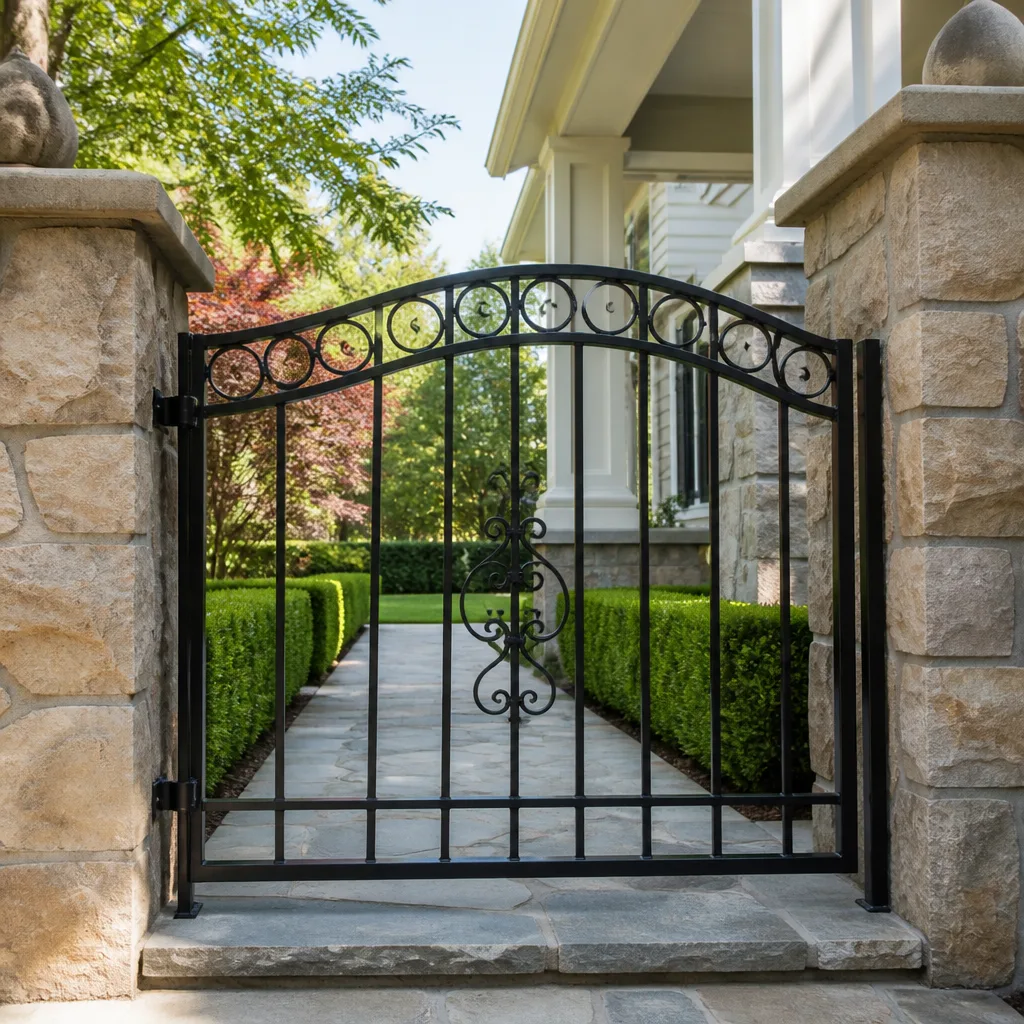 Wrought iron
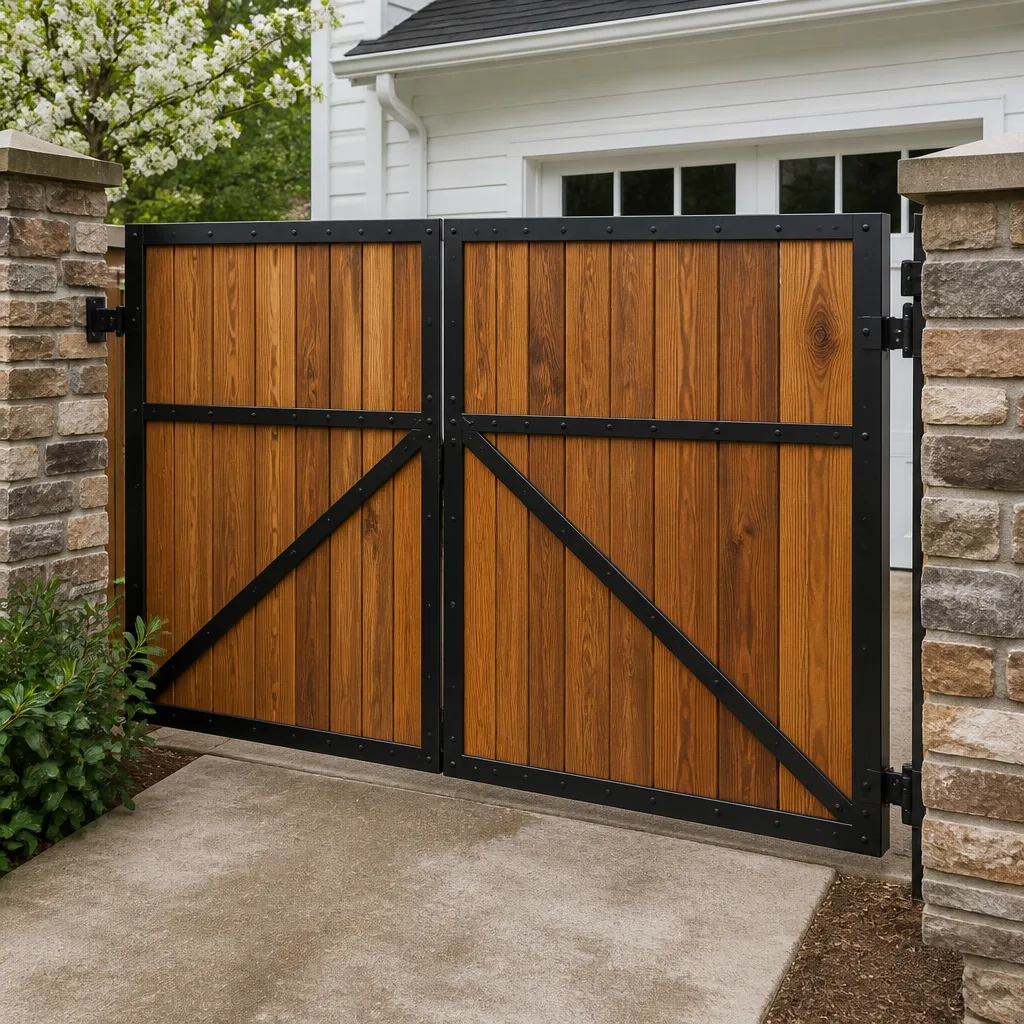 Wood & steel frame
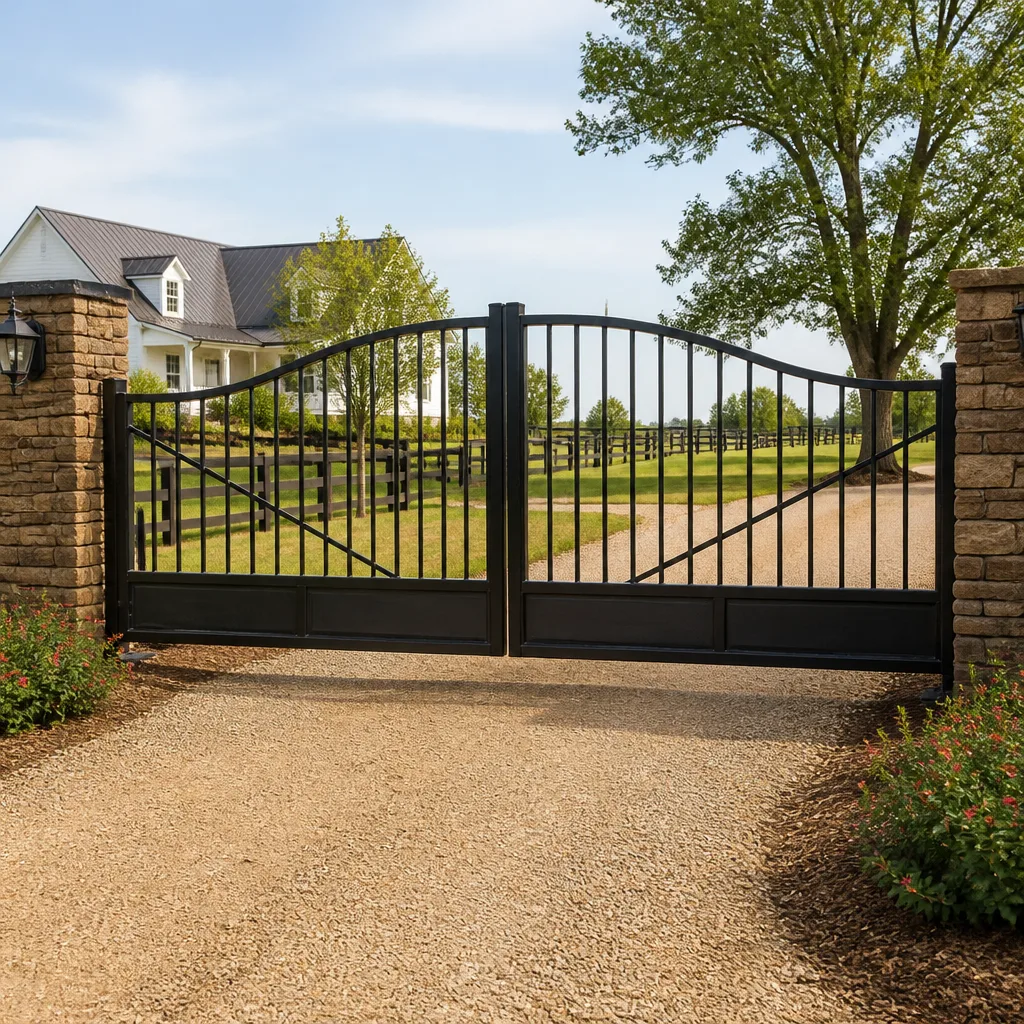 Farm & ranch
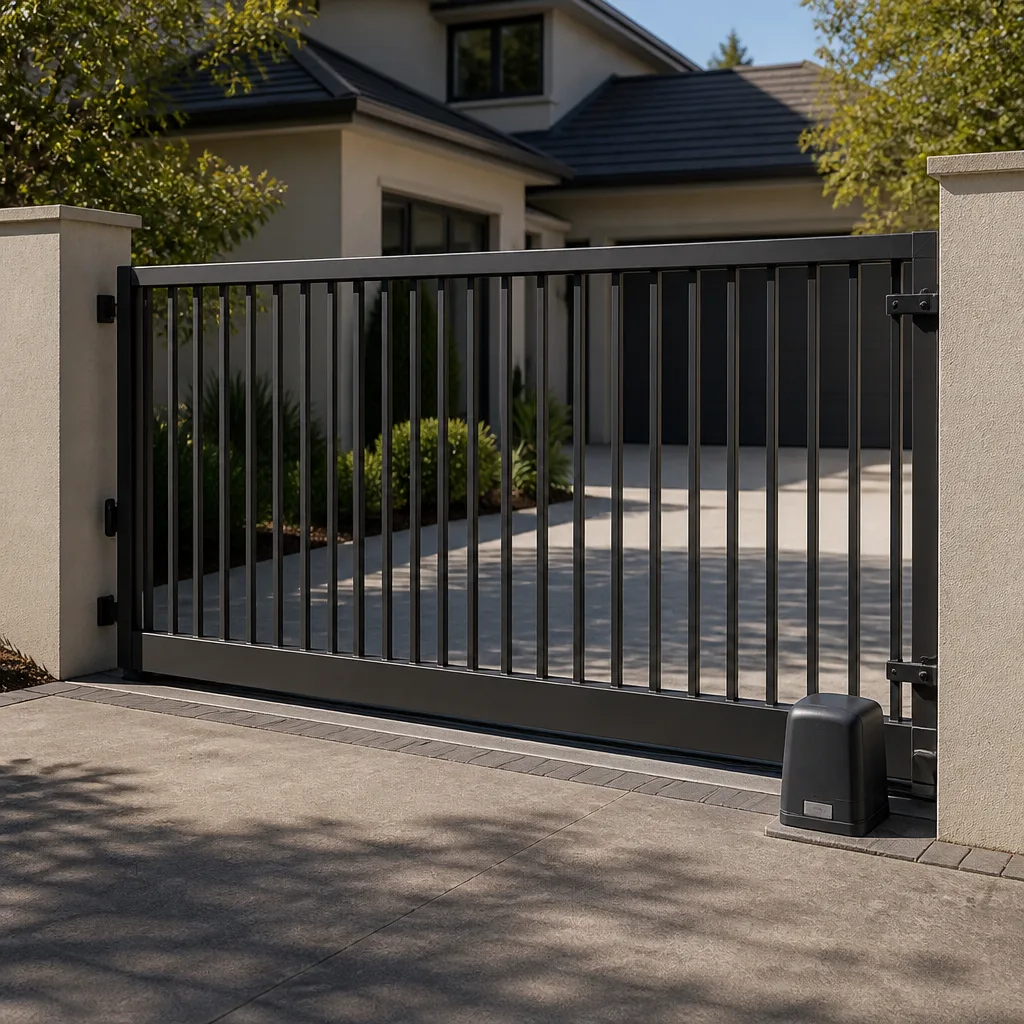 Sliding driveway gates
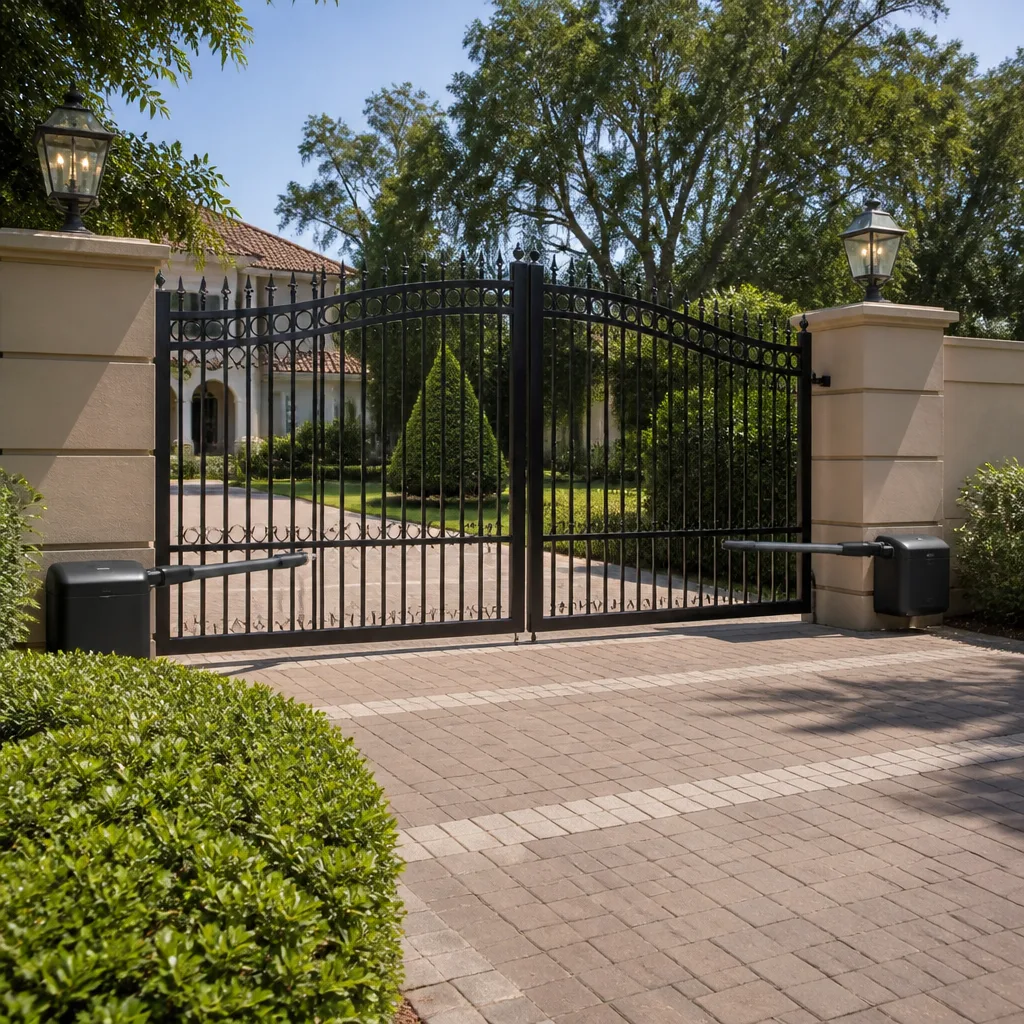 LiftMaster operators
Free on-site gate assessment - hinges, posts, and your LiftMaster or Nice gate operator checked before anything is quoted
The assessment is free and the quote is the invoice.
Get your free estimateDIY vs Professional Gate Repair: The Hempstead Homeowner’s Decision Guide
Replacing a broken weld on a swing gate and reprogramming a LiftMaster CSW200 are both called “gate repair” on YouTube. They are not the same job. One of them might cost you a Saturday afternoon and a tube of epoxy. The other can put you in an emergency room or leave you liable for an injury on your property. This guide draws a clean line between the two categories for homeowners in Hempstead, New York, where salt air, freeze-thaw cycles, and lot lines that put gates close to sidewalks create a set of conditions that generic how-to videos and more guides & resources never fully address. You will learn which repairs are genuinely safe to attempt, which ones are not, what each carries in real dollar terms, and how to document your own work so a technician can build on it instead of starting over.
Quick Answer
Most Hempstead homeowners can safely handle gate wheel replacement, remote battery swaps, manual release operation, and basic hinge bolt tightening on their own. Control board replacement, UL 325 safety sensor calibration, loop detector installation, and post re-footing should go to a licensed gate technician because they carry electrical shock risk, entrapment liability, and code compliance requirements that most DIY guides do not disclose. If the repair touches the motor, the control board, or any safety sensor, call a professional for Gate Repair services. If it is purely mechanical and visible, a careful homeowner with the right tools can usually manage it.
Styles & brands we work with
Table of Contents
- The Real Divide: Mechanical vs. Automated Systems
- DIY-Safe Repairs: What You Can Actually Handle
- Repairs That Require a Licensed Technician
- UL 325 and Why It Changes Everything
- Liability Exposure Under New York Insurance Law
- Tools and Skill Prerequisites for Each DIY Task
- How to Document a DIY Repair Correctly
- Hempstead-Specific Conditions That Change the Math
The Real Divide: Mechanical vs. Automated Systems
The question is not “am I handy enough to fix a gate?” The question is “what kind of gate do I have, and what exactly failed?” A swing gate that drags on the ground because a wheel wore out is a mechanical problem. A gate that opens halfway and stops, or reverses without warning, or refuses to respond to the remote, is an automated system problem. The two categories demand different tools, different knowledge, and different levels of risk tolerance.
In Hempstead, we see a lot of properties where the gate was installed years ago and the original installer is long gone. The homeowner inherited a system they did not choose, with a motor they have never heard of, and a control board hidden inside a housing that has been corroding in salt air since the Obama administration. That is not a judgment on anyone. It is just what the housing stock looks like in this part of Nassau County. The practical consequence is that many Hempstead homeowners are deciding between DIY and professional repair without fully understanding what is behind the panel.
Mechanical repairs are forgiving. If you replace a wheel and it does not roll perfectly, you adjust it. If you tighten a hinge bolt too much, you back it off. The failure mode is usually visible and reversible. Automated system repairs are not forgiving. A miswired connection on a FAAC control board can fry the board. A miscalibrated safety edge on a BFT operator can cause the gate to close on a person. The failure mode is invisible until something bad happens.
That distinction, more than anything about skill or confidence, should drive the decision. It is the framework behind every section in this guide.
DIY-Safe Repairs: What You Can Actually Handle
The following repairs are genuinely accessible to a homeowner who can read a manual, follow a sequence, and use basic hand tools. None of them involve line voltage. None of them require opening a control board housing. None of them carry entrapment or injury liability. They are listed in order of increasing difficulty.
Remote Battery Replacement
This is the repair most people are already doing without calling it a repair. The remote stops working, or works only at close range, and the first question is always “is it the gate or is it the remote?” Answer that question by testing a second remote if you have one. If the second remote works, the first remote needs a new battery. Most gate remotes use a standard coin cell or a small alkaline battery. The battery type is stamped on the inside of the case. Replacement takes under five minutes and costs between $3 and $8.
Manual Release Operation
Every automated gate has a manual release mechanism. On some models it is a lever. On others it is a keyed cylinder or a pull chain. Knowing how to operate it matters for two reasons. First, during a power outage in Hempstead, after a nor’easter or a summer thunderstorm, you need to be able to open and close the gate by hand. Second, if the motor fails, the manual release lets you keep using the gate while you wait for service. This is not a repair so much as a basic operating skill, but it is the single most useful thing a homeowner can learn about their gate system. The release is usually located on the motor housing or the arm that connects the motor to the gate. Your owner’s manual shows the exact location for your model.
Gate Wheel Replacement
Sliding gates and heavy swing gates ride on wheels. Wheels wear out. It is the most common mechanical failure we see on Hempstead’s larger properties, especially gates that open onto gravel or uneven pavement. Replacing a wheel usually involves unbolting the old wheel assembly, bolting on the new one, and adjusting the height so the gate levels out. The job takes one to two hours for a first-timer. The parts cost $25 to $120 per wheel depending on size and load rating. The skill requirement is basic: you need to be comfortable supporting a heavy gate with a jack while the wheel is off, and you need to torque the mounting bolts properly so the wheel does not shift under load.
Hinge Bolt Tightening
Swing gates sag over time because hinge bolts loosen. The gate starts dragging, the lock no longer lines up, and the motor works harder than it should. Tightening hinge bolts is a symptom-level fix, not a permanent cure if the post itself is moving, but it is safe and worth doing. Use a socket set and check every bolt on every hinge. If a bolt spins freely without tightening, the hole is stripped and you are looking at a more involved repair. That is the point where you stop and call someone. But a simple tightening job takes fifteen minutes and requires no experience beyond knowing which direction to turn a wrench.
These four repairs cover most of what a homeowner can reasonably expect to handle. They share three characteristics: the failure is visible, the fix is mechanical, and the consequence of getting it wrong is a gate that still does not work, not an injury or a fire.
Repairs That Require a Licensed Technician
The following repairs should not be attempted by a homeowner, regardless of how many YouTube views the tutorial has. Each one involves line voltage, control logic, safety-certified components, or structural work that affects the safety of people and vehicles passing through the gate.
Control Board Replacement
The control board is the brain of the gate system. It receives signals from remotes, keypads, loop detectors, and safety sensors, and it tells the motor what to do. Replacing one involves disconnecting and reconnecting multiple low-voltage and sometimes line-voltage connections, matching the new board to the existing motor, and programming it for the specific configuration of the gate. One miswired terminal can destroy the new board instantly. That is not hyperbole. We have replaced boards that homeowners purchased and installed themselves, usually after the second or third board failed. The fix costs more than the original repair would have. Control board replacement on a Viking or Linear system in Hempstead typically runs $450 to $900 including parts, depending on the model and the programming required.
UL 325 Safety Sensor Calibration
UL 325 is the standard that governs automated gate safety. It requires gates to have entrapment protection: photo eyes, contact edges, or both, calibrated to detect an obstruction and reverse or stop the gate. Calibrating these sensors is not a matter of lining up two beams and calling it done. The sensor position, sensitivity, and response time all have to meet the standard. A sensor that is misaligned by a few degrees might pass a quick visual test but fail under real-world conditions. The consequence of getting this wrong is a gate that closes on a child, a pet, or a delivery driver. In New York, that consequence includes personal injury liability that can exceed the value of the home. Sensor calibration is quick for a trained technician and expensive to get wrong for a homeowner.
Loop Detector Installation
A loop detector is the system that makes a gate open automatically when a vehicle pulls up to it. It uses a wire loop buried in the driveway that senses the metal mass of a car. Installing one involves cutting a channel in the driveway, laying the wire, sealing it, connecting it to the gate operator, and tuning the detector’s sensitivity. Most homeowners do not have the tools to cut a clean channel in asphalt or concrete. Most homeowners also do not know that loop detectors require specific wire types, specific loop dimensions, and specific sealant materials to survive Hempstead’s freeze-thaw cycles. A poorly installed loop fails within a year or two, and then the gate stops opening automatically and nobody knows why. Professional loop detector installation runs $600 to $1,200 in Hempstead depending on driveway length and surface type.
Post Re-Footing
Gate posts carry enormous repeated loads. A swing gate pushes and pulls against its post every time it opens and closes. Over years, posts loosen in their footings, especially in Hempstead’s clay-heavy soil, which expands and contracts with moisture. When a post starts moving, every other part of the gate suffers: hinges bind, the gate sags, the motor strains. Re-footing a post means digging out the old footing, resetting the post, and pouring new concrete. It is not a repair most homeowners should attempt because the post has to be perfectly plumb and the new footing has to cure before the gate can be re-hung. A post that is off by an inch at the base is off by several inches at the top of a tall gate. This is structural work, and it is the most expensive repair on this list, sometimes costing more than replacing the gate motor itself.
Gate Motor Repair in Hempstead covers the automated side of the system in more detail. The short version for this guide: if the problem is behind the cover panel, call a technician.
UL 325 and Why It Changes Everything
UL 325 is the document that most DIY gate repair content ignores completely. It is a safety standard published by Underwriters Laboratories that governs automatic gate openers. It exists because automated gates have killed people. Children have been entrapped and crushed. Adults have been struck by gates that malfunctioned. The standard mandates specific safety features and specific performance requirements for every automated gate sold or installed in the United States.
What this means for the DIY question is straightforward. Any repair that touches the motor, the control board, the safety sensors, or the physical operation of an automated gate is, in effect, a UL 325 compliance issue. If a homeowner replaces a control board and wires a sensor incorrectly, the gate might work fine for months. Then one day it closes on someone, and the investigation finds that the safety system had been disabled by an installation error. At that point, the question is no longer whether the repair worked. The question is who is liable.
In our experience, most Hempstead homeowners have never heard of UL 325, and that is not a criticism. The standard is written in technical language and it is not exactly a topic of dinner-table conversation. But it is the single most important fact to understand before attempting any automated gate repair. The mechanical repairs we listed in the DIY section do not touch UL 325 systems. The repairs we listed in the professional section exist, in part, because UL 325 requires them to be done correctly.
Liability Exposure Under New York Insurance Law
New York is a pure comparative negligence state. That means if someone is injured on your property, the court assigns a percentage of fault to each party, and your liability is reduced by the percentage you are not responsible for. It also means that an injured party can collect from you even if they were partly at fault. For a homeowner with a gate, that is the legal backdrop for every automated gate repair decision.
Most homeowners insurance policies in New York cover personal injury on the property, including injuries caused by gates. But the policy is a contract, and like any contract, it has conditions. One of those conditions is that the property, including any automated equipment, has been maintained in accordance with applicable safety standards. If a DIY repair alters a UL 325 safety system and an injury results, the insurance company’s first move will be to determine whether the repair voided coverage. If the answer is yes, the homeowner is personally on the hook. That could mean hundreds of thousands of dollars in medical bills and a judge or jury deciding the numbers.
What actually voids a claim varies by policy and carrier. But the general principle is consistent: an unlicensed, undocumented modification to a safety-certified system is exactly the kind of fact that triggers a coverage denial. A professional gate repair company in Hempstead carries its own insurance, documents the work, and provides a written guarantee. If something goes wrong after a professional repair, there is a chain of responsibility. If something goes wrong after a DIY repair, there is only the homeowner.
This is not legal advice. It is the reason we tell every Hempstead homeowner the same thing: mechanical repairs are usually safe to attempt. Electrical, automated, and safety-system repairs are not, not because the homeowner is incapable, but because the downside risk is not worth the money saved.
Tools and Skill Prerequisites for Each DIY Task
Being honest about capability is the difference between a successful DIY repair and a mess that costs more to fix than hiring someone in the first place. Here is what each DIY-safe repair actually requires, without optimism bias.
Remote Battery Replacement
Tools: a small Phillips or flathead screwdriver, depending on the remote case. Skills: none beyond matching the battery type. Time: under five minutes. Cost of failure: the remote still does not work, and you buy a new battery. This is a true beginner task.
Manual Release Operation
Tools: none, or possibly a key if the release is keyed. Skills: reading the manual that came with your gate operator, or finding it online by model number. Time: ten minutes to locate and practice. Cost of failure: you cannot find the release and the gate stays closed. No damage is possible if you follow the manual. This is a true beginner task.
Gate Wheel Replacement
Tools: a floor jack or bottle jack rated for the gate’s weight, jack stands if the gate is large, a socket set, a wrench set, and possibly a rubber mallet. Skills: you need to understand how to safely support a load, how to remove and replace bolts without stripping them, and how to adjust wheel height so the gate tracks straight. Time: one to two hours for a first-timer. Cost of failure: a gate that still drags, a stripped bolt, or a wheel that comes loose after a few weeks. This is an intermediate task. If you have never used a jack to support something heavy, start by watching someone who has.
Hinge Bolt Tightening
Tools: a socket set or wrench set. Skills: basic. You need to know the difference between snug and over-torqued. Time: fifteen to thirty minutes. Cost of failure: a stripped hole, which means the simple fix becomes a more involved repair. This is a beginner task with a small risk of turning into an intermediate one.
The honest assessment for most Hempstead homeowners is that two of the four DIY tasks are genuinely beginner-friendly, one is intermediate, and one is beginner with a caveat. None of them require special talent. They do require the right tools and a willingness to stop if the job is going sideways. The willingness to stop is the part that separates successful DIYers from the other kind.
How to Document a DIY Repair Correctly
This section matters more than most homeowners expect. When a DIY repair does not solve the problem, or solves it partially, or solves it for a month and then the problem comes back, a professional technician arrives at a gate with a history. If that history is a vague memory and some loose parts on a workbench, the technician has to reverse-engineer what was done before making any progress. If that history is documented, the technician can build on the work and the bill reflects diagnosis and forward progress, not forensic archaeology.
Here is how to document a DIY gate repair so a professional can work with it, not against it:
- Take photos before you start. Wide shots of the whole gate, close shots of the area you are working on, and shots of any labels, model numbers, or wiring. These photos become the baseline if something does not go as planned.
- Note the make and model of the gate and motor. This is the single most useful piece of information you can record. Write it down somewhere permanent: a note on your phone, a page in a home maintenance binder. A technician who knows the exact model before arriving can bring the right parts and the right knowledge.
- Record what you removed. If you take off a wheel, photograph the old one next to the new one. If you remove bolts, photograph their size and location. If you disconnect anything, photograph it before you disconnect it.
- Write down what you did, step by step. Not a novel. A list: “Removed left wheel assembly. Replaced with 6-inch V-groove wheel from hardware store. Tightened bolts to snug. Gate still drags on right side.” That list is gold to a technician.
- Save the parts you removed. Put old wheels, old bolts, old batteries in a labeled bag. The old part often tells a technician more than a description ever could.
- Note what you did NOT touch. If you avoided the motor, the control board, and the sensors, say so. That tells the technician the automated system is in its original condition and limits the diagnostic scope.
This documentation process takes ten extra minutes and it pays for itself every time a DIY repair turns into a professional follow-up. More than that, it signals to any technician that you respect the work, which changes the tone of the entire service call for the better.
Hempstead-Specific Conditions That Change the Math
Gate repair advice written for Arizona or Florida does not apply cleanly to Hempstead. The conditions here are different in ways that affect which repairs are safe to attempt and how long they last.
Salt air is the first factor. Hempstead sits close enough to the Atlantic that metal corrodes faster than it does inland. Gate hardware, hinges, and motor housings all accumulate corrosion that weakens components and makes simple repairs more complicated. A bolt that would come loose with a wrench in Ohio might snap in Hempstead because the threads have rusted solid. That raises the difficulty level of even basic mechanical work. It also means that the first time a homeowner attempts a DIY repair, they are often dealing with hardware that has been sitting in salt air for a decade. That is not the same job as replacing a wheel on a two-year-old gate in a dry climate.
Freeze-thaw cycles are the second factor. Hempstead winters cycle the ground through dozens of freeze and thaw events. Soil shifts. Posts move. Concrete footings crack. The cumulative effect on a gate is that small misalignments grow over time, and a repair that works in September may fail in February because the post shifted again. That is not the DIYer’s fault. It is the environment. But it means that some repairs that look mechanical are actually structural, and fixing the visible symptom without addressing the post movement is a temporary patch.
Lot density is the third factor. Hempstead is a dense, older suburb. Many gates sit close to sidewalks, property lines, and neighboring houses. A gate that swings out over a public sidewalk carries a different liability profile than a gate that swings into a private yard in a rural area. Every automated gate repair, and every decision about who does it, happens in that context. A gate failure on a Hempstead sidewalk does not just inconvenience the homeowner. It affects anyone walking past.
These three factors, salt air, freeze-thaw shifting, and dense lots, are the reason that local knowledge matters in gate repair. A generic guide can tell you how to change a wheel. It cannot tell you how to deal with a wheel assembly that has spent twelve winters in salt air, on a gate that has shifted three inches since the post was set, within five feet of a public sidewalk where children walk to school. That is a Hempstead gate repair problem, and it is the kind of problem where experience changes the outcome.
Gate Repair in Hempstead covers the full scope of what professional service includes in this area. For homeowners considering a full replacement rather than a repair, Gate Installation in Hempstead walks through what that process looks like, including the permitting and structural considerations that apply to new gates in Nassau County.
Common Mistakes to Avoid
- Diagnosing the symptom instead of the cause. A gate that drags might need a wheel replacement, or it might need a post reset. Replacing the wheel when the post is moving means you will be replacing the wheel again in six months. Watch the post while the gate moves. If the post moves, the wheel is not the problem.
- Using the wrong replacement parts. Gate wheels are not interchangeable. A wheel rated for 300 pounds on a gate that weighs 800 pounds will fail quickly and may damage the track. Check the load rating before you buy. The same applies to batteries: using the wrong voltage in a remote can damage the remote’s circuit board.
- Opening the control board housing “just to look.” The control board on a Linear or BFT operator is not a place for curiosity. One wrong touch with a metal tool can short a board that costs several hundred dollars to replace. If you do not know what you are looking at, close the housing and call a technician.
- Skipping the manual release test after any repair. Every automated gate should be tested in manual mode after any work on or near the gate. If the manual release does not work, the gate cannot be opened during a power outage, and that is a problem waiting for the next Hempstead storm.
- Ignoring the sensors. Photo eyes and contact edges are easy to bump out of alignment during even simple mechanical work. If your gate starts behaving differently after a wheel or hinge repair, check the sensors before assuming the repair failed. A misaligned sensor makes the gate reverse or refuse to close, and the fix is often a simple realignment.
- Not documenting the work. Every DIY repair should leave a record: photos, notes, the make and model of the gate, and what was changed. When the repair eventually needs professional follow-up, and most eventually do, that record is the difference between a quick diagnostic and a long one.
- Assuming insurance covers everything. New York homeowners insurance has conditions, and an undocumented modification to a safety-certified gate system is a reason for a claim to be reduced or denied after an injury. Mechanical repairs are low risk. Automated system work is not. The insurance implications are not worth the savings.
See the difference
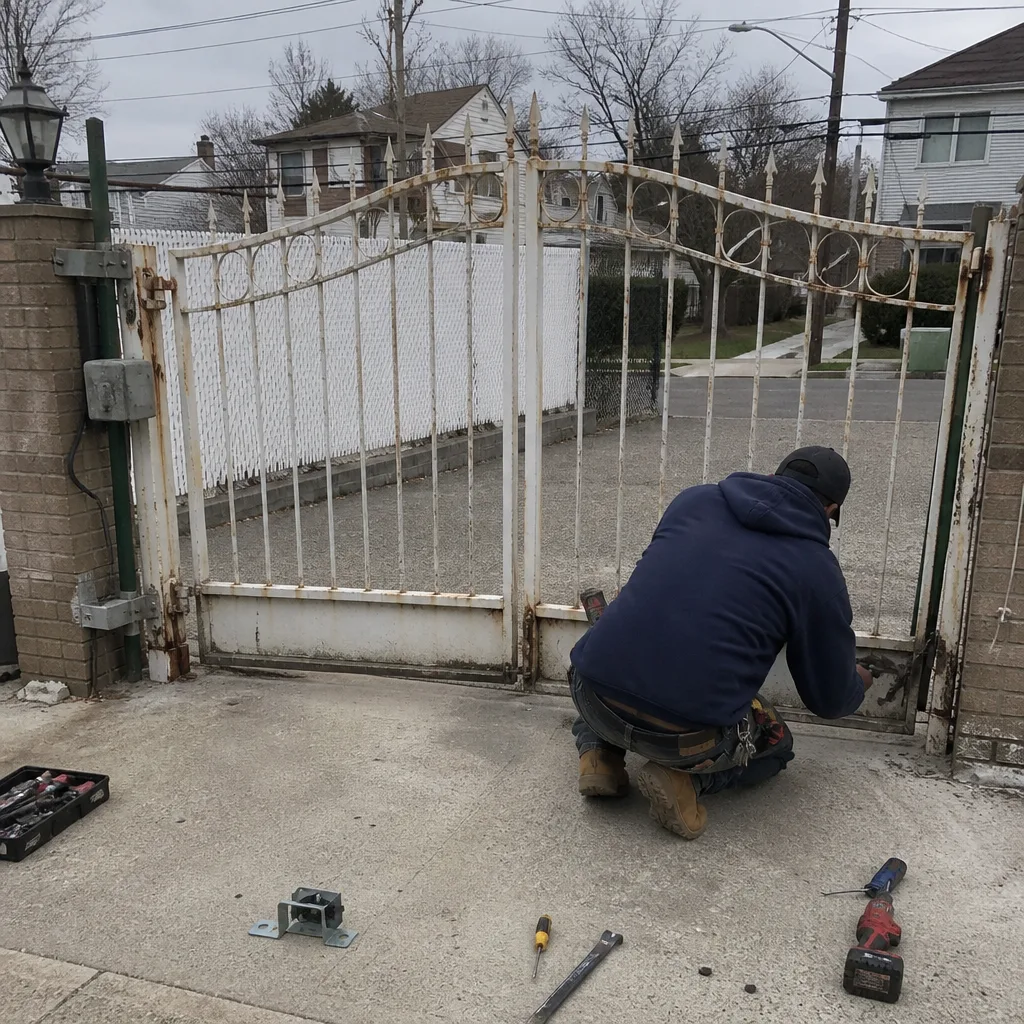 Before
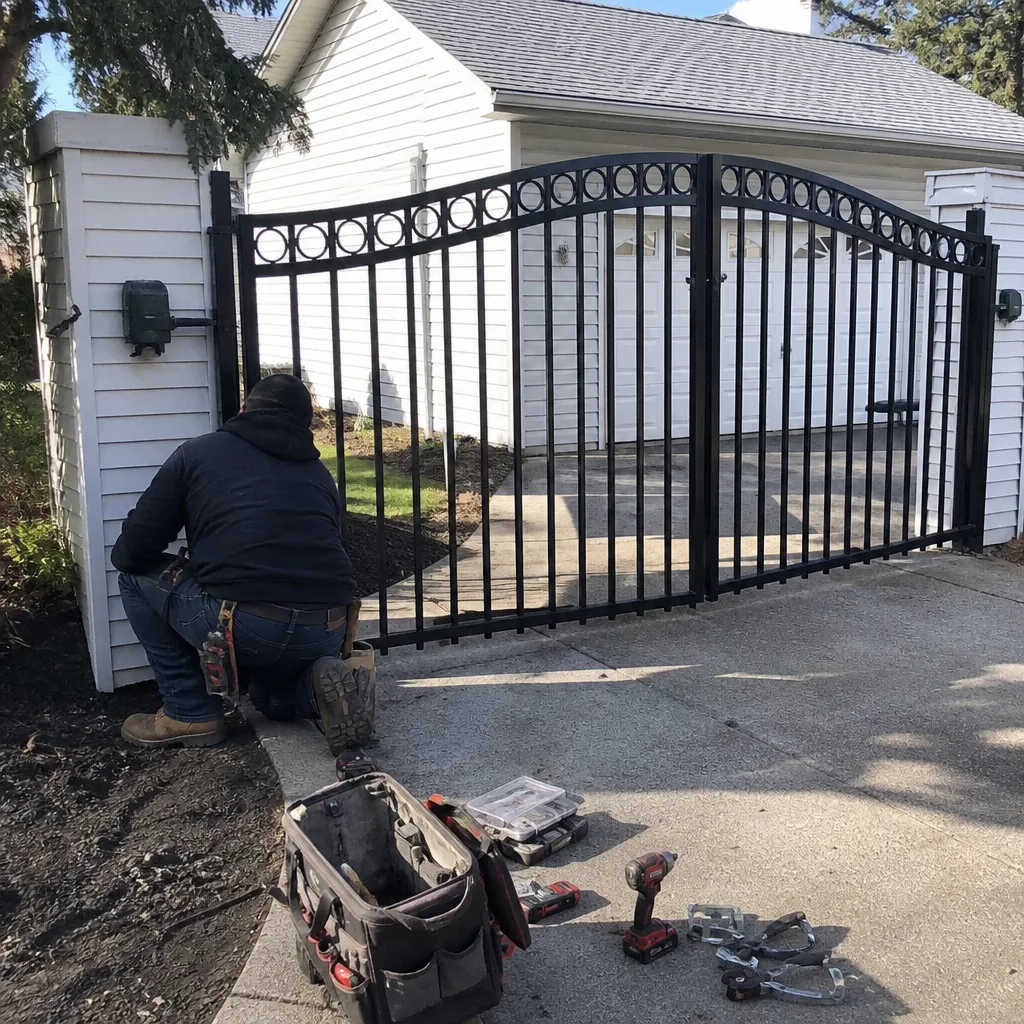 After
After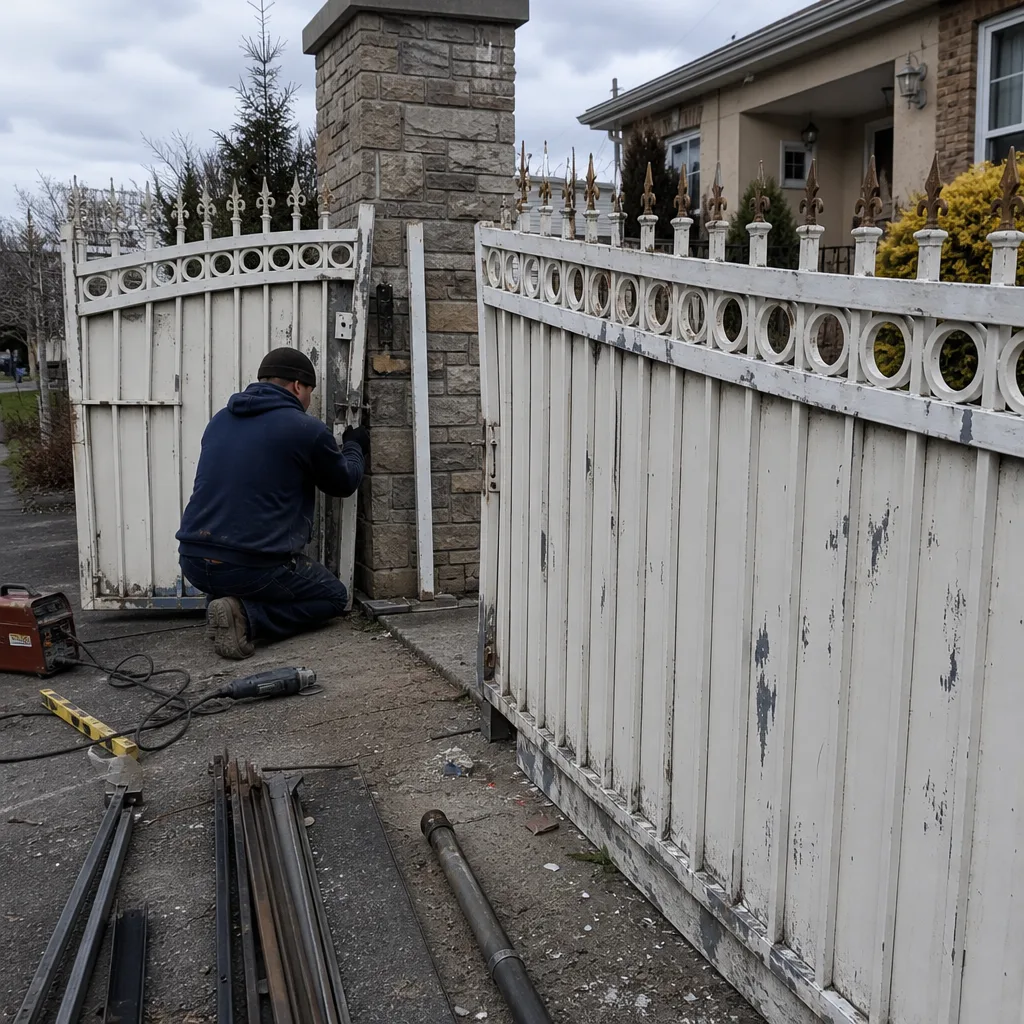 Before
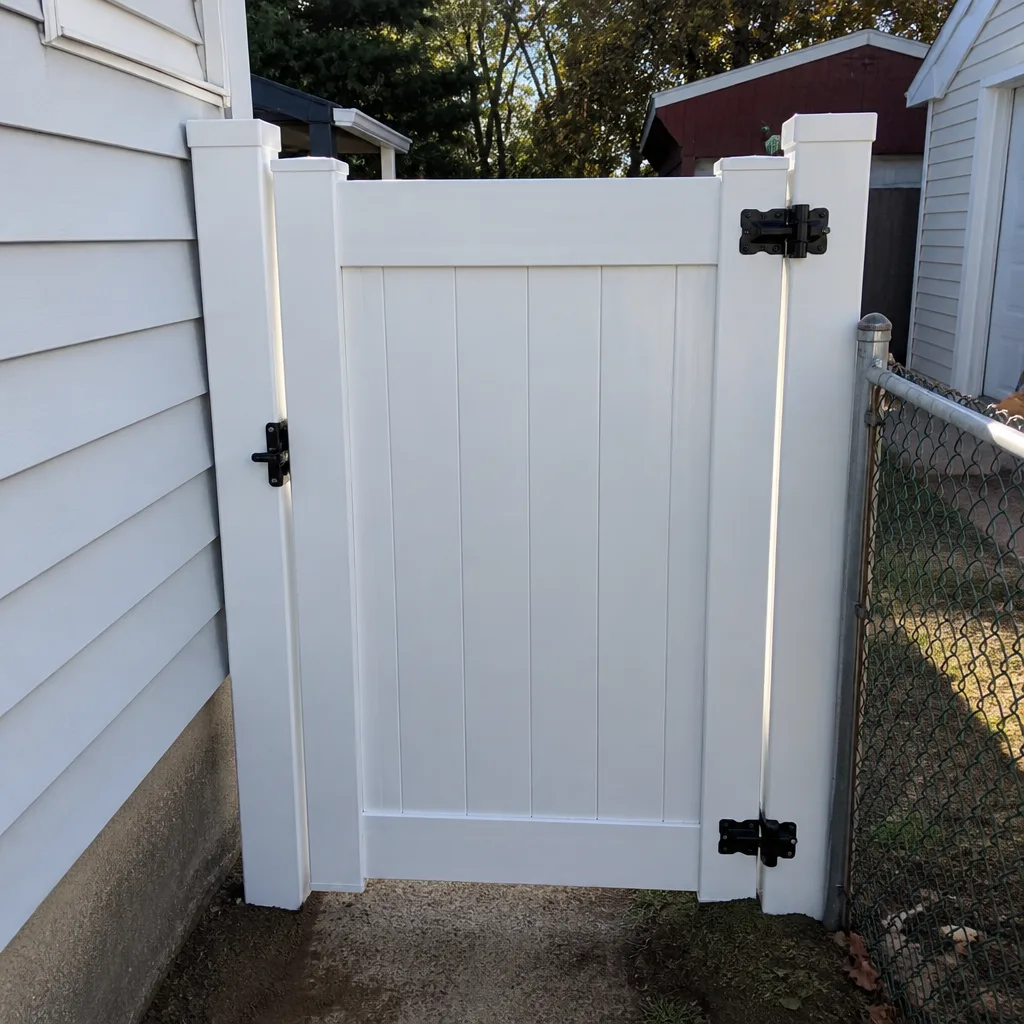 After
After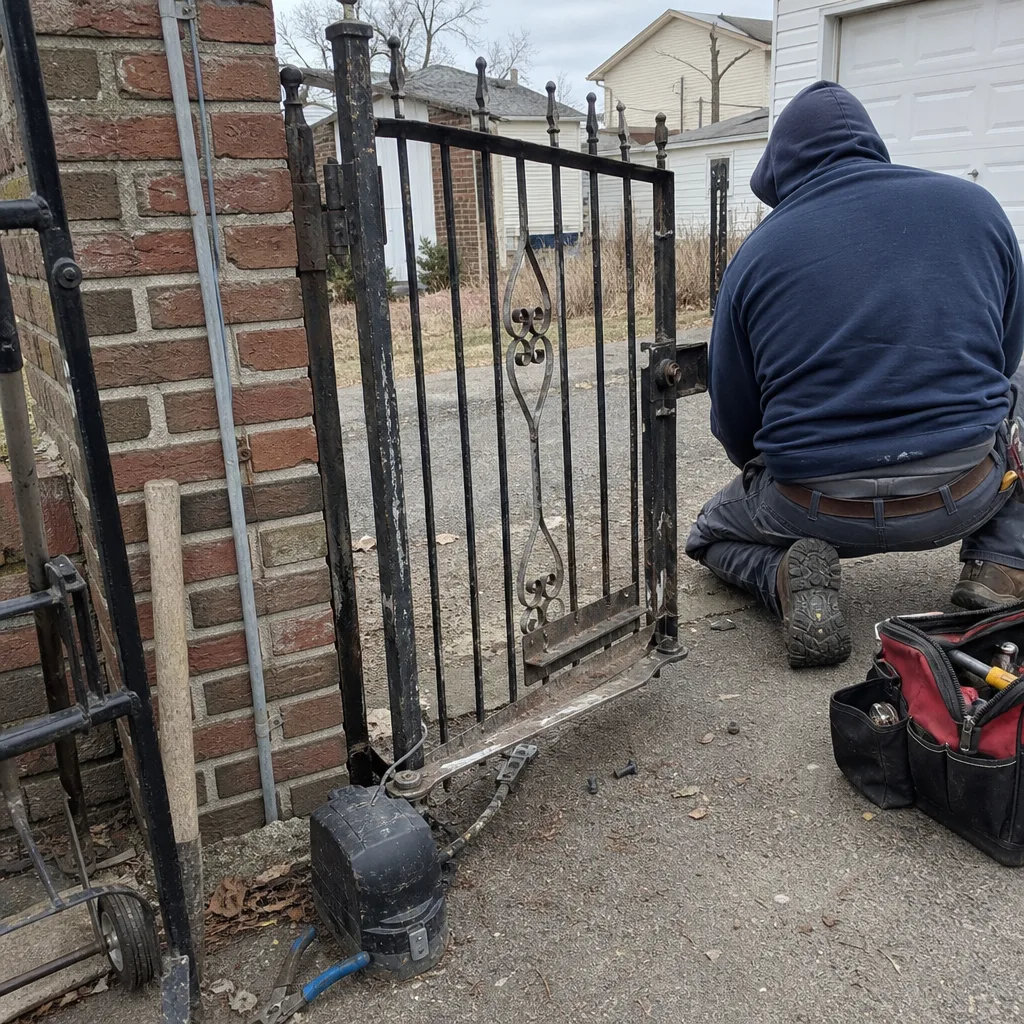 Before
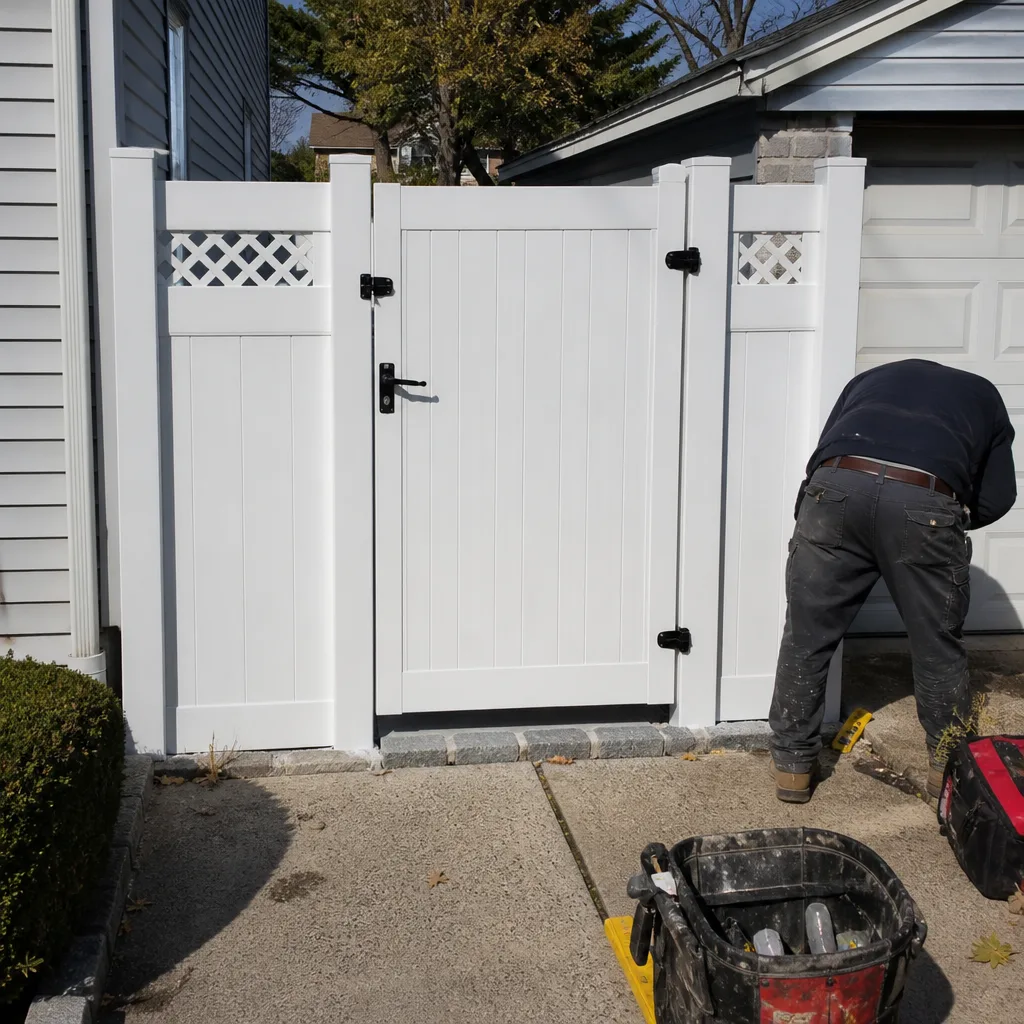 After
AfterWhen to Call a Professional
Call a professional when the repair touches the motor, the control board, the safety sensors, the loop detector, or the posts. Call a professional when the gate behaves unpredictably: opens partially, reverses without reason, makes grinding noises, or trips a breaker. Call a professional when you have attempted a DIY fix and the problem persists or returns within a few weeks. Call a professional when you are not sure what failed in the first place. All of these situations share a common thread: the failure is either electrical, safety-related, or structural, and the consequence of a mistake is not a gate that still does not work, but an injury, a fire, or a liability claim. Carver Gate Repair Hempstead offers free estimates in Hempstead, New York. Call (516) 559-4870 and a live person answers, any hour, any day of the year.
Frequently Asked Questions
Gate repair in Hempstead typically runs $150 to $450 for mechanical repairs like wheel replacement, hinge tightening, and sensor realignment. Control board replacement runs $450 to $900 including parts. Post re-footing runs $800 to $2,000 depending on the post size and the footing depth. Every Carver Gate Repair job includes a written price before any work starts. Call (516) 559-4870 for an exact quote, estimates are free.
No. Gate motors are connected to line voltage, and the internal components include capacitors that store charge even when the power is off. A mistake inside a gate motor housing can cause electrical shock or fire. Gate motor repair belongs with a technician who is trained on your specific brand, whether that is FAAC, BFT, Linear, Viking, or another manufacturer. Our gate motor repair page covers the common failure modes and what repair involves.
Remote battery replacement is the easiest and safest gate repair a homeowner can do. It requires no tools beyond a small screwdriver, takes under five minutes, and costs under ten dollars. The second easiest is hinge bolt tightening, which takes about fifteen minutes with a socket set. Both are beginner-level tasks with no electrical involvement.
Homeowners insurance generally covers sudden damage to gates, such as damage from a fallen tree or a vehicle collision. It generally does not cover wear and tear, which is what most gate repairs involve. More importantly, if a DIY repair alters a safety system and someone is injured, the insurance company may reduce or deny the claim. Document any DIY work and keep automated system repairs in professional hands. Call (516) 559-4870 to talk through what a repair would involve before you touch anything.
Most mechanical repairs, like wheel replacement or hinge tightening, are completed in one to two hours on site. Control board replacement typically takes two to three hours, including programming and testing. Post re-footing takes a full day plus curing time, and the gate cannot be used for several days while the concrete sets. A technician can give you an accurate time estimate once they see the gate. Call (516) 559-4870 to schedule a free estimate.
Our technicians are trained on LiftMaster, FAAC, BFT, Linear, Viking, Ghost Controls, DoorKing, Elite, and Mighty Mule equipment. That covers the vast majority of gate motors installed in Hempstead and across Nassau County. If your motor is one of these brands, we know the failure modes, the parts, and the programming. If it is not, we will tell you honestly and point you in the right direction.
The Bottom Line
The DIY-versus-professional question for gate repair in Hempstead comes down to one distinction: mechanical versus automated. Mechanical repairs like wheel replacement, hinge tightening, remote batteries, and manual release operation are safe for most homeowners with basic tools and an honest assessment of their own capability. Automated repairs like control board replacement, sensor calibration, loop detector installation, and post re-footing carry electrical, safety, and liability risks that are not worth the money saved. Hempstead’s salt air, freeze-thaw cycles, and dense lots make repairs here harder than in drier, newer, or more spread-out markets. Document whatever you do yourself, and when the repair touches the system rather than the hardware, call a professional. Carver Gate Repair Hempstead offers free estimates, written prices, and a live person on the phone 24/7. Call (516) 559-4870.
Written by Lonnie Burke, Owner at Carver Gate Repair Hempstead, serving Hempstead since 2008.