
Last updated October 16, 2026
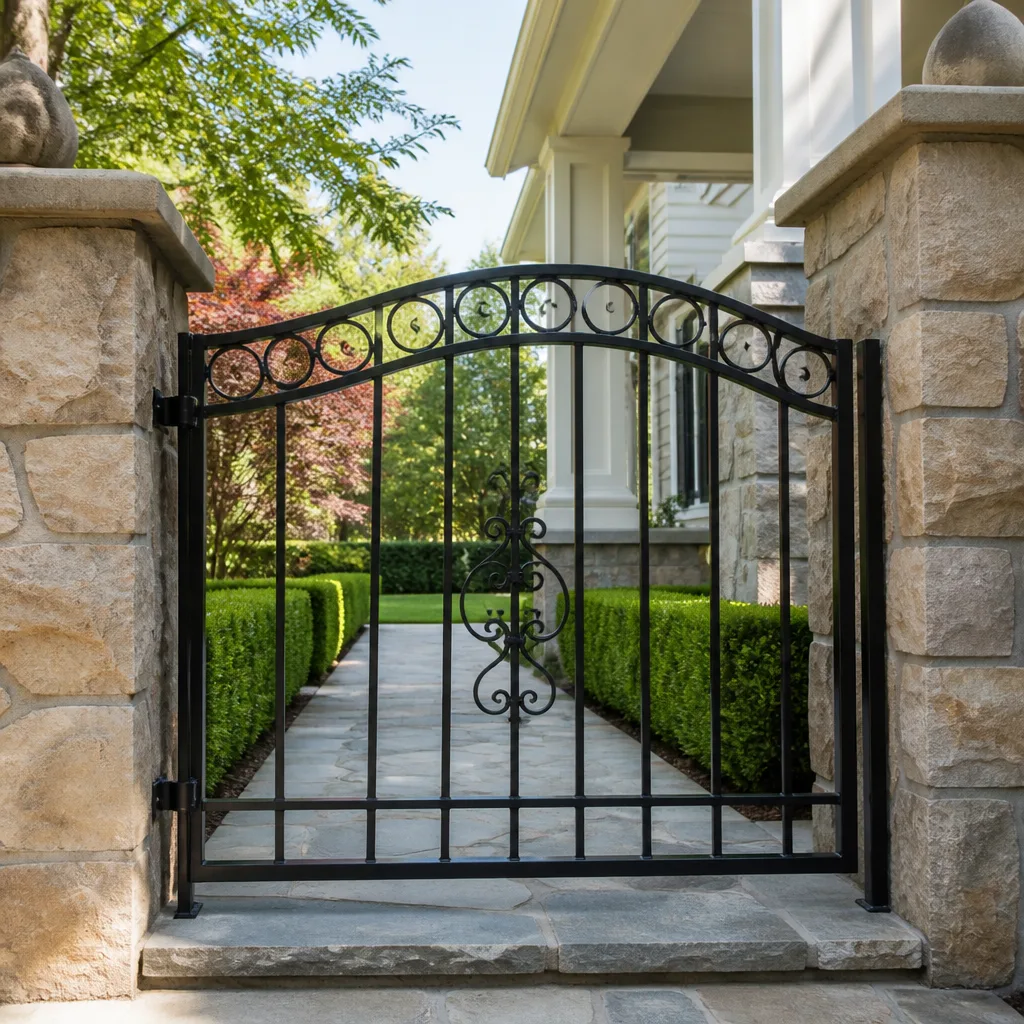 Wrought iron
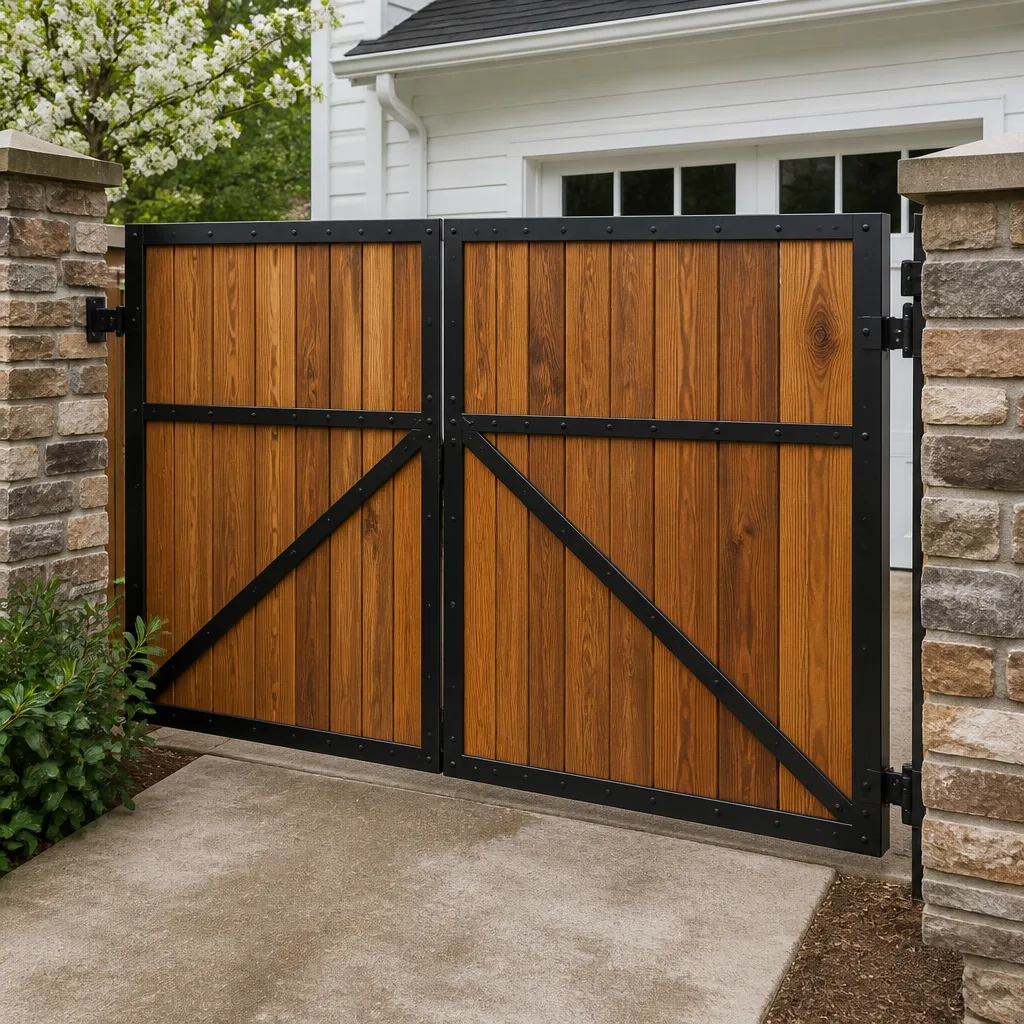 Wood & steel frame
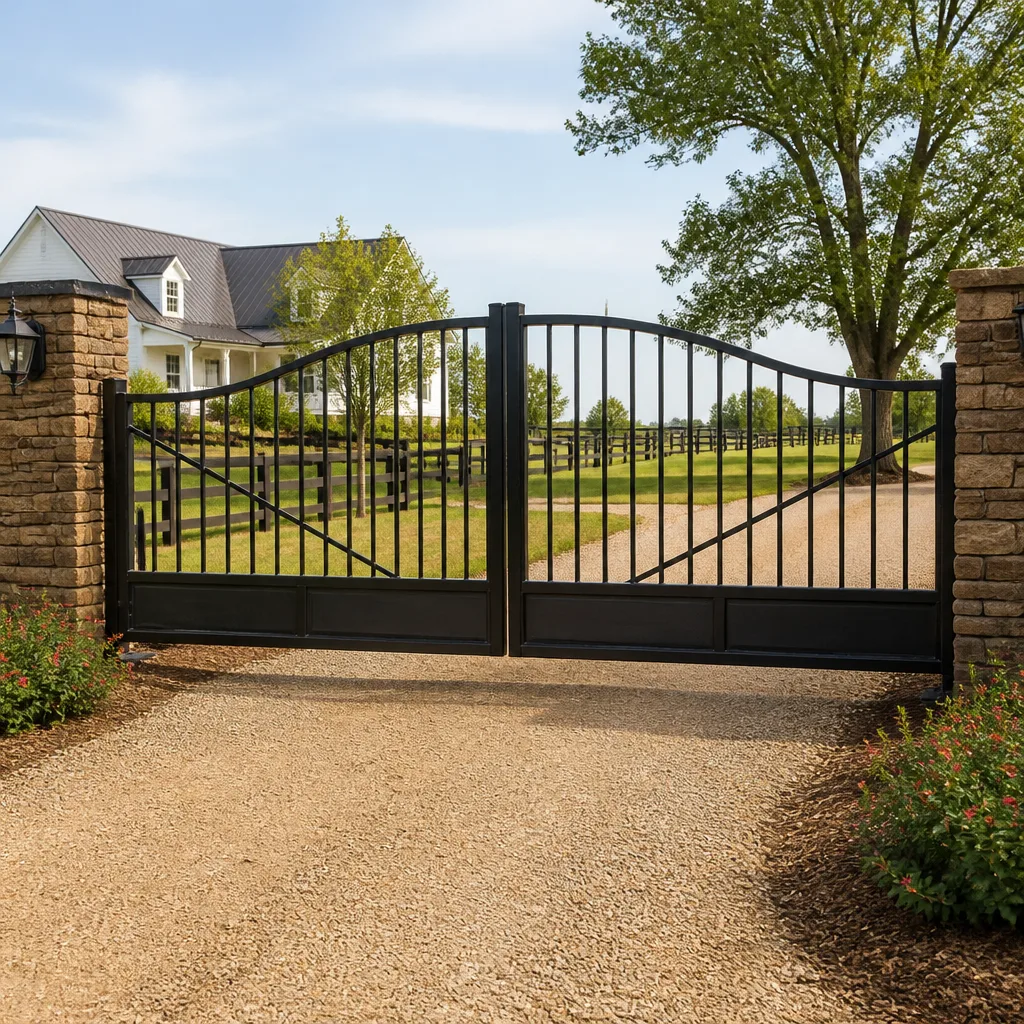 Farm & ranch
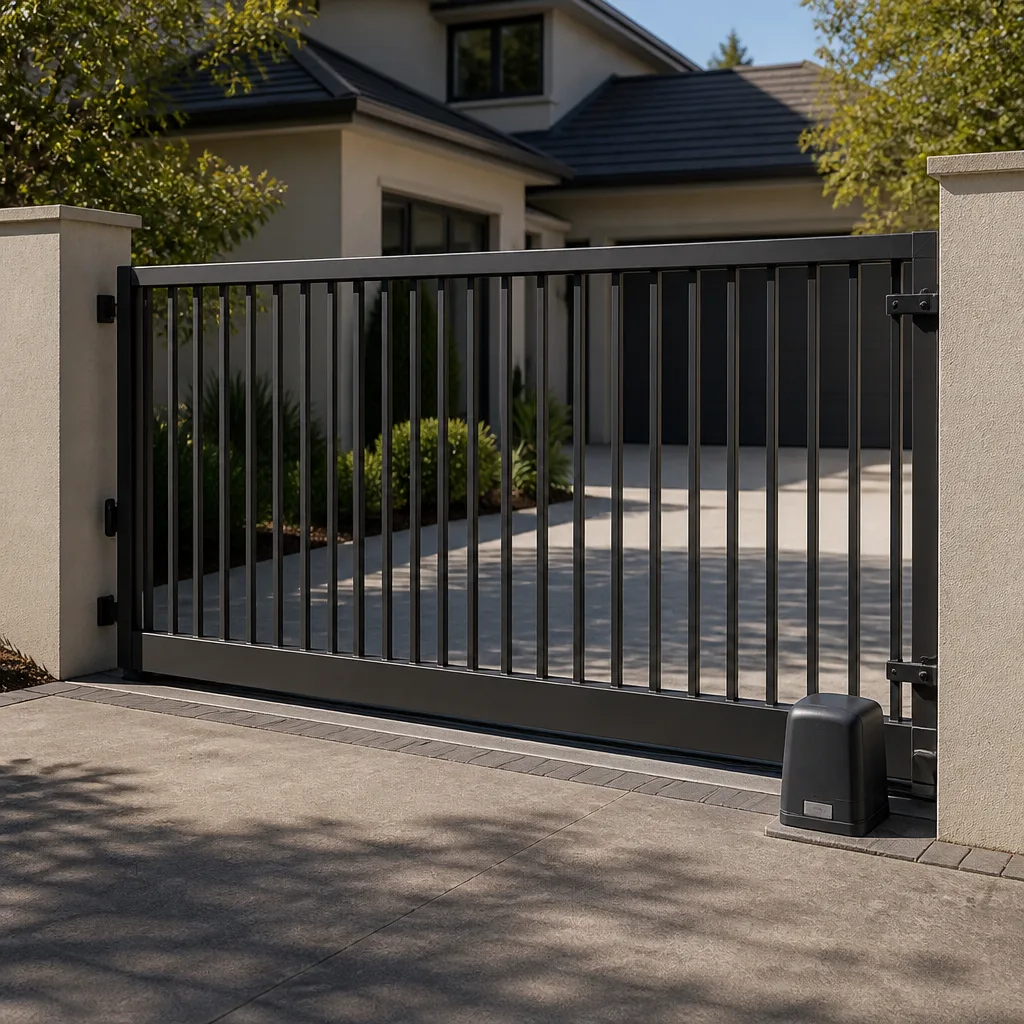 Sliding driveway gates
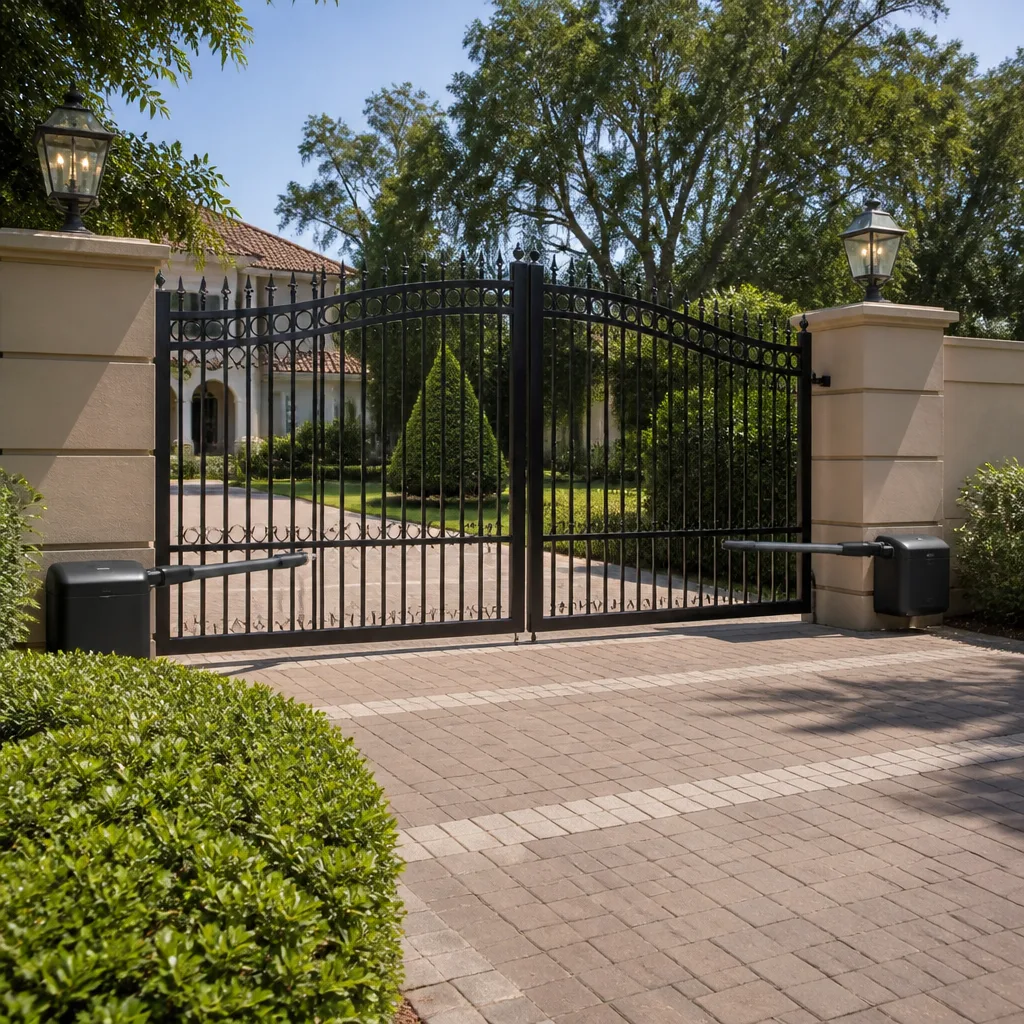 LiftMaster operators
Free on-site gate assessment - hinges, posts, and your LiftMaster or Nice gate operator checked before anything is quoted
The assessment is free and the quote is the invoice.
Get your free estimateThe Complete Guide to Gate Repair in Hempstead
A technician who shows up without knowing whether your issue is mechanical or electrical will guess. And you’ll pay for the guess. Here’s the number that should get your attention: in our service records across Hempstead, roughly 4 out of 10 repair calls we run are for a gate motor that was perfectly fine. The real problem was a hinge, a wheel, or a misaligned track that made the motor work too hard until it tripped a limit or burned a capacitor. This guide maps every gate system component to its failure mode so you can walk into any our Gate Repair services call in Hempstead knowing exactly what you’re dealing with, what it should cost, and what a written scope of work ought to say.
Styles & brands we work with
Quick Answer
Gate repair in Hempstead typically costs $180 to $340 for common mechanical fixes (hinges, wheels, track alignment, limit switch replacement) and $450 to $1,200 when the motor or control board needs replacement. Most mechanical repairs are same-day jobs; motor and board replacements usually take 2 to 5 business days because parts ship from the manufacturer. Before you call anyone, read our Gate Repair Cost Breakdown: The Hempstead Homeowner’s Reference for 2026 and learn to tell a hardware problem from a motor problem from a wiring problem. That single skill is the difference between a $200 fix and a $900 misdiagnosis.
Table of Contents
- Gate Anatomy 101: The Three Systems That Fail
- Why Hempstead’s Weather Breaks Gates Differently
- Component-by-Component Failure Map
- The Nine Motor Brands in Nassau County and What Their Warranties Cover
- What a Written Scope of Work Should Include, Line by Line
- The Repair Sequence, Step by Step
- Safety: What You Should Not Touch Yourself
- Common Mistakes to Avoid
- When to Call a Professional
- Frequently Asked Questions
- The Bottom Line
Gate Anatomy 101: The Three Systems That Fail
Every automated gate in Hempstead, whether it’s a swing gate on a driveway off Peninsula Boulevard or a sliding gate behind a commercial lot near the Southern State, runs on three independent systems. They fail differently, they cost different amounts to fix, and they require different skills to diagnose. Until you can separate them in your mind, every repair quote you receive is just a number with no reasoning behind it.
System One: The mechanical hardware. Hinges, wheels, track, rollers, the gate frame itself, the post the gate hangs from, the chain or belt if there is one. This is the part that moves. It carries all the weight. Mechanical failures are the most common gate problems we see in Hempstead, and they’re usually the cheapest to fix because the parts are standard steel, aluminum, or nylon, not electronics.
System Two: The motor and operator. The motor is the muscle. The operator is the housing that contains the motor, the gears, the limit switches that tell the gate when to stop, and the logic that translates “open” and “close” commands into motion. For swing gates, the operator is either an articulating arm mounted on the gate and post, or an underground piston that pushes the gate leaf. For slide gates, the operator is a gearbox with a drive sprocket that engages a rack welded to the gate frame.
System Three: The controls and wiring. The control board, the remote receivers, the keypads, the loop detectors buried under the driveway, the photo eyes, the safety edges, and every foot of low-voltage wire connecting them. Control failures look like motor failures because the symptom is the same: the gate doesn’t move. The difference is that the motor is fine. The board just isn’t telling it to run.
- Hardware failure signs: gate scrapes the ground, sags visibly, makes grinding noise when moving, moves freely by hand but won’t stay closed, wheels wobble or bind.
- Motor/operator failure signs: humming sound but no movement, burning smell, gate moves very slowly, opens but won’t close, trips its own breaker repeatedly.
- Control/wiring failure signs: no sound at all when activated, remote stopped working but keypad works (or vice versa), gate opens on its own, gate reverses for no reason, keypad lights up but nothing happens.
If you have the patience to check these three categories before calling, you’ll save yourself the most expensive sentence in the gate repair business: “We’ll have to open it up and see.” On a repair call, “open it up and see” is the phrase that precedes a $400 surprise. Knowing your symptoms lets you ask for a written diagnostic before a written estimate.
For the full range of what mechanical gate work involves here, our Gate Repair in Hempstead page breaks down pricing by repair type.
Why Hempstead’s Weather Breaks Gates Differently
A gate in Hempstead does not age the same way a gate in Garden City or Levittown ages. It’s not the same climate, even though they share a zip code prefix. Hempstead sits close enough to the South Shore that salt air drifts up through the wetlands and settles on everything metal. It’s a fine, invisible salt film that eats through zinc plating, accelerates rust on gate frames and hinge pins, and corrodes the terminals inside control boards. We don’t see this pattern inland. We see it constantly here.
Then there’s the freeze-thaw cycle. Hempstead winters rarely stay below freezing for long. Instead, the temperature crosses the freezing line dozens of times each season. Water gets into hairline cracks in concrete gate posts, freezes, expands, and widens the crack. Water gets into roller bearings, freezes, and spalls the bearing surfaces. Water gets into the weep holes at the bottom of an operator housing, freezes, and blocks the drain. When it thaws, the housing holds water. Then the next freeze cracks the housing itself. This is why we replace more operator housings in Hempstead in March than in January. The damage happens all winter. The failure shows up in the spring.
On top of that, Hempstead has a lot of older housing stock with narrow driveways and tight setbacks. Gates get installed close to the street, close to the house, close to the property line. That means limited swing clearance, which means operators run near the edge of their duty cycle. A motor rated for a 14-foot gate leaf running a 14-foot gate leaf with a slight hinge bind is running over its rating. The salt air ages the hinge. The bind loads the motor. The freeze-thaw cracks the post. One gate, three failures, all from the same environment.
If you have a gate that’s more than ten years old in Hempstead and it hasn’t had its hinges and posts inspected, assume the metal has degraded further than it looks on the surface. The Gate Installation in Hempstead information on our site covers what replacement hardware should include for coastal Nassau County properties.
Component-by-Component Failure Map
Here is the map. Each component, its normal lifespan in this climate, its failure mode, and what the fix involves. This is the knowledge that prevents misdiagnosis. When a technician tells you something failed, you’ll know whether that makes sense given the age and the symptoms.
Hinges and Pivot Points
Lifespan in Hempstead: 8 to 15 years for galvanized steel, 15 to 25 for sealed-bearing stainless or bronze.
Failure mode: The hinge pin wears into an oval hole. The gate sags toward the latch side. The sag puts load on the motor, which struggles to lift the gate through its arc. You’ll hear it: a low groan at the start of each cycle, a scrape at the midpoint. If the gate moves freely by hand when the operator is disengaged, the motor is not the problem. The hinge is.
Fix: Replace hinges, not just the pins. A hinge that’s worn its pin hole has also lost its alignment. Replacing only the pin is a temporary fix that fails within a season in salt air. Typical repair cost in Hempstead: $180 to $320 per pair of hinges depending on gate weight.
Wheels, Rollers, and Track
Lifespan: 5 to 10 years for nylon rollers, 10 to 20 for steel wheels on a maintained track.
Failure mode: A wheel gets flat from sitting in one position. Salt air pits the steel. The gate starts to “lump” as it rolls, little jerks each time the flat spot hits the track. Those jerks stress the operator gearbox. The track itself shifts over time as the concrete pad settles or heaves. A track that’s off by three-eighths of an inch will bind a roller enough to trip the motor’s obstruction sensor.
Fix: Replace rollers as a set, never individually. A gate with one new roller and three worn ones wobbles, and the new roller fails early. Reset and shim the track. Typical cost: $140 to $260 for roller replacement, $90 to $150 additional for track correction.
Limit Switches
Lifespan: 5 to 8 years in a coastal environment. Less if the operator housing leaks.
Failure mode: The gate opens but doesn’t stop at the right point. It slams the post or stops short. Or it drives past its closed position and bounces back open. The switches are small electromechanical triggers inside the operator housing. Salt corrosion pits the contacts. The gate doesn’t know where it is anymore.
Fix: Replace the switch assembly and adjust the limits. This is a $120 to $200 job on most operators, but it’s often misdiagnosed as a “board problem” because the symptom looks like the brain is failing. It isn’t. It’s the nerve endings. If the gate moves normally but stops wrong, ask about limit switches before authorizing a board replacement.
Control Board
Lifespan: 7 to 12 years. Shorter if the housing isn’t sealed or the installation is near sprinkler overspray.
Failure mode: Intermittent everything. The gate works one day and not the next. The remote works from one angle but not another. The board’s relays stick. Capacitors bulge. In Hempstead, the salt film on the board traces is a common culprit. We’ve repaired boards that looked fine to the eye but had a hairline corrosion bridge across two traces. The gate would open but not close. The fix was cleaning and sealing the board, not replacing it.
Fix: A good gate technician will test the board with a multimeter before condemning it. A lazy one will replace the board and the problem will come back when the new board corrodes the same way, because the real issue was water entry into the housing. Board replacement runs $300 to $650 installed depending on brand. Sealing the housing and fixing the water entry is an additional $80 to $150 and is not optional in Hempstead if you want the new board to survive.
Loop Detectors and Safety Edges
Lifespan: 5 to 10 years for loop detectors, 3 to 6 for safety edge strips.
Failure mode: The gate won’t close because it thinks a car is in the way. Or it closes on a car because the safety edge is broken and the detector is dead. Loop detectors are coils of wire buried in the driveway that sense the metal mass of a vehicle. They fail when the wire breaks, often after freeze-thaw shifting of the pavement. Safety edges are pressure-sensitive strips on the leading edge of the gate. They fail when the rubber degrades, which happens faster in salt air. A gate that reverses for no reason usually has a failing loop. A gate that doesn’t reverse when it hits something has a dead safety edge, and that’s a serious problem.
Fix: Loop detector replacement with new wire saw-cut into the driveway runs $250 to $400. Safety edge replacement runs $80 to $180 per edge. Never run a gate with a non-functioning safety edge. That’s a liability, not just a repair.
The Nine Motor Brands in Nassau County and What Their Warranties Cover
Most Hempstead homes have one of nine gate motor brands installed. The original installer picked it, and the homeowner has lived with it ever since. Here’s what matters: each brand has a different parts network, a different warranty structure, and a different failure pattern. Knowing yours tells you how long a repair should take and whether replacement parts will be available in five years.
DoorKing: The most common slide gate operator in Nassau County commercial and larger residential work. Known for heavy-duty gearboxes and parts availability going back decades. Warranty is typically 2 years on the operator, but the gearbox often outlives the electronics. DoorKing boards fail before DoorKing motors do. Used often on sliding gates in Hempstead’s commercial strips and multi-car driveways.
Elite: Common on residential swing gates. The SL3000 and its variants dominate the South Shore. Warranty is 2 years parts, and Elite’s parts network is reliable. Weak points are limit switches and the articulating arm joints, which pick up salt corrosion faster than the operator body.
Ghost Controls: A newer brand, mostly DIY-installed but increasingly specified by contractors for light residential swing gates. Battery-backed with solar option. Warranty is 18 months. The weak point is the battery pack, which lasts 2 to 3 years in Hempstead’s temperature swings and costs about $150 to $250 to replace. Good hardware, but the electronics are not sealed as well as DoorKing or FAAC for coastal exposure.
Mighty Mule: The homeowner-grade brand on many Hempstead driveways. Inexpensive up front. Parts are widely available. Warranty is typically 12 to 18 months. These operators are not sealed for salt air. We see more Mighty Mule board corrosion than any other brand, and more premature motor failure from running undersized operators on heavy gates. If you have a Mighty Mule on a gate heavier than its rating, expect the motor to fail in 3 to 5 years. The fix is either an upgraded Mighty Mule or a commercial-grade replacement like an Elite or Linear.
We train our technicians on all nine brands, including DoorKing, Elite, Ghost Controls, Mighty Mule, FAAC, BFT, Linear, Viking, and LiftMaster, so the right parts and know-how are matched to your system. Whatever brand your gate runs, the diagnostic process matters more than the brand name. But the brand determines part cost and lead time, which is why we ask when you call. For motor-specific repair details, see our Gate Motor Repair in Hempstead page.
One more thing about warranties. A manufacturer warranty covers defective parts, not installation labor. It does not cover water entry, salt corrosion, power surges, or operator abuse from a binding gate. Before you assume a dead motor is a warranty claim, check the failure mode. If the failure mode is corrosion, no manufacturer will pay. If the failure mode is mechanical bind, no manufacturer will pay. The Garrison Standard we operate under means every repair gets a written guarantee good for a full year, regardless of the manufacturer’s warranty. That’s our backing, not theirs.
What a Written Scope of Work Should Include, Line by Line
A written scope of work is the only document that protects you from a moving price. Before any repair starts in Hempstead, you should have one. Here is exactly what it should say, line by line.
- The diagnostic finding. Not “gate not working.” Find this: “Limit switch contacts corroded on the open side. Gate opens fully but does not stop, causing post impact.” The diagnostic line tells you the technician actually diagnosed it, not guessed.
- The repair to be performed. “Replace both limit switches, clean and seal operator housing, adjust limits to factory spec.” Action words, not vague words. If the scope says “gate service” or “gate tune-up” without saying what that means, ask for specifics. “Gate service” is not a thing. It’s an invoice line waiting to happen.
- The parts to be used. Brand and part number where applicable. “DoorKing limit switch assembly, P/N 2600-100” or “aftermarket universal limit switch.” Aftermarket is not always bad, but you should know which you’re paying for.
- The labor cost. A number. Not an hourly rate with “estimated hours” that might balloon. A fixed labor number.
- The total price, including all fees. Trip charge, diagnostic fee, parts, labor, tax. All of it. One number.
- The guarantee. How long the repair is covered and what’s included. “Written guarantee on this repair, good for a full year. Free second visit if the repair fails within the guarantee period.” That sentence should be in writing.
- Exclusions, if any. For example: “Does not include replacement of hinge hardware found to be worn. Hinge inspection recommended.” If a scope lacks exclusions, it’s incomplete.
At Carver Gate Repair Hempstead, every job gets a written price before any work starts, and you can find more guides & resources on our site. That’s not an upsell. It’s the operating rule. The number doesn’t move at the door. If a repair scope doesn’t include the seven lines above, ask for them before you sign. Any legitimate gate repair company will provide them without hesitation.
The Repair Sequence, Step by Step
Here is how a proper gate repair should unfold, in order. This sequence exists so shortcuts become visible. A shortcut is any step skipped.
- Pre-call triage. Before anyone arrives, a good company asks questions: Which direction does the gate open? Does it move at all? Does the remote work? This tells the technician which system is likely involved and what parts to bring. A company that doesn’t ask questions before dispatch is planning to diagnose at your expense.
- On-site diagnostic. The technician visually inspects hardware, disengages the operator, moves the gate by hand, tests motor draw with an ammeter, checks limit switches, inspects the board for corrosion and water entry, and tests loop detectors and safety edges. A complete diagnostic takes 30 to 45 minutes on most residential gates.
- Written estimate. After the diagnostic, you get the scope of work described above. You approve it. Or you don’t. Either way, the price was quoted while the gate was apart, not after.
- Parts sourcing. If parts are in stock in the truck, repair starts immediately. If parts ship from the manufacturer, this is where the timeline extends. DoorKing and Elite parts often arrive in 2 to 3 days. Some FAAC and BFT parts can take 5. The estimate should include the parts lead time.
- Installation. The repair is performed. Old parts come out, new parts go in, everything is torqued and sealed properly.
- Test cycle. The gate is cycled open and closed at least ten times. Limit switches are verified. Safety edges are tested by obstructing the gate. Loop detectors are tested with a vehicle if applicable. The gate should open and close smoothly, stop in the right place, and reverse when it meets resistance.
- Site cleanup and walkthrough. Debris removed, housing sealed, everything tidy. The technician shows you what was done and confirms the written guarantee.
Shortcuts hide in steps 2 and 6. A technician who disengages the motor and immediately says “motor’s dead” without testing the board has skipped half the diagnostic. A technician who cycles the gate twice and calls it good has skipped the test cycle that catches intermittent failures. In our experience in Hempstead, the most expensive repair calls we inherit are the ones where someone skipped a step six months earlier and the same problem came back worse.
Safety: What You Should Not Touch Yourself
There are parts of a gate system that a homeowner should not attempt to repair. This isn’t caution for its own sake. Gates are heavy. A 14-foot steel gate leaf weighs 300 to 600 pounds. When it moves, it stores kinetic energy. When a spring, hinge, or cable fails under load, that energy releases fast.
Do not attempt to remove or adjust a gate spring, counterweight, or tension cable yourself. These components are under load even when the gate is stationary. A cable that snaps can cut. A gate that releases suddenly can crush. If you hear a sharp pop and then the gate sags or swings freely, shut the system off and call a professional. Do not try to “fix it back” with the motor engaged.
Do not work on an underground operator piston. These are hydraulic or mechanical pistons mounted below grade. Releasing one without bracing the gate can drop the entire leaf. There is no safe DIY version of this repair.
Do not open a control board housing and probe it with a live circuit. Low voltage doesn’t mean harmless. A shorted board can start a fire. Corroded terminals can arc. A professional uses the right meters and knows what to isolate.
What you can do is observe. Watch how the gate moves. Listen. Take notes. Your observations make the technician’s diagnostic faster and more accurate. The physical repair belongs to a trained technician with the right tools and the right insurance.
Common Mistakes to Avoid
- Replacing the motor before checking the hardware. We see this regularly in Hempstead. A gate sags because a hinge is worn. The motor works harder, trips its obstruction sensor, and gets blamed. The motor gets replaced. The sag remains. The new motor fails early. Check the mechanical system first, always.
- Ignoring water entry. A control board fails from corrosion. The board gets replaced. Nobody seals the housing. Six months later, the new board fails the same way. In Hempstead’s salt air, sealing the housing is part of the repair, not an add-on.
- Skipping the load test. A motor is rated for a maximum gate weight and length. If your gate is heavier than the rating, any motor will fail early. A good diagnostic includes measuring the gate and the amp draw. A cheap repair skips it.
- Accepting “gate service” as a scope line. That phrase means nothing. It doesn’t say what will be done, what parts will be used, or what the guarantee covers. Demand specifics in writing.
- Trying to fix electrical issues with spray lubricant. WD-40 fixes a squeak. It does not fix a limit switch, a control board, or a safety edge. It also attracts road dust and makes everything worse over time.
When to Call a Professional
Call a gate professional when the gate won’t move, moves erratically, makes grinding or popping sounds, reverses for no reason, or won’t stop at the right position. Call when you see visible sag, cracked welds, or rust bloom around hinge points. Call when the remote and keypad both fail, which points to a control board issue. And call immediately if the gate closes on a vehicle or person, even once. That’s a safety edge or loop detector failure, and it’s not negotiable.
Carver Gate Repair Hempstead offers free estimates in Hempstead. Call (516) 559-4870. A live person answers, day or night, weekends and holidays. We don’t route to voicemail after hours. Every job gets a written price before work starts, a background-checked uniformed technician, and a written guarantee good for a full year.
Frequently Asked Questions
Most gate repairs in Hempstead run between $180 and $340 for mechanical fixes like hinges, rollers, track alignment, and limit switches. Motor replacement typically runs $450 to $1,200 depending on brand and gate size. Control board replacement runs $300 to $650. Every repair from Carver Gate Repair Hempstead includes a written price before work starts, so the number you approve is the number you pay. Call (516) 559-4870 for a free estimate.
Disengage the operator and move the gate by hand. If it’s stiff, grinds, scrapes, or sags, the problem is mechanical. If it moves freely by hand but won’t move under power, or if it moves erratically and stops wrong, the problem is electrical or in the controls. This single test saves homeowners in Hempstead hundreds in misdiagnosed motor replacements.
For most mechanical repairs, yes. We dispatch same-day for repairs inside Hempstead when we have the parts on the truck. Motor and control board replacements usually require parts from the manufacturer and take 2 to 5 business days. Call (516) 559-4870 and a live person will tell you the soonest available time, not a callback queue.
Our technicians are trained on nine brands: LiftMaster, FAAC, BFT, Linear, Viking, Ghost Controls, DoorKing, Elite, and Mighty Mule. If your gate has a different brand installed, we can diagnose it and source parts or recommend a suitable replacement. The brand matters for parts lead time; the diagnostic process is the same.
Every repair from Carver Gate Repair Hempstead carries a written guarantee good for a full year from the date of service. If the repair fails within that year, we return and make it right at no charge. That’s the 365-Day Done Right Promise, and it’s in writing on every job.
Yes. Hempstead’s proximity to the South Shore means airborne salt settles on metal and electronics. We see more corrosion-related failures in Hempstead than in inland Nassau County towns. The fix is sealing operator housings, using marine-grade hardware on coastal properties, and inspecting hinges and boards annually. A gate that’s maintained for corrosion outlasts one that isn’t by 5 to 7 years in this climate.
The Bottom Line
Gate repair doesn’t have to be a black box. The systems are mechanical, electrical, and controls. Each fails in a pattern. Each pattern has a fix with a known price range. The homeowners who get billed fairly in Hempstead are the ones who know the difference between a hinge problem and a board problem, who demand a written scope of work, and who call a company that diagnosed before they priced. That’s what this guide is for. If your gate is acting up, call (516) 559-4870. We’ll diagnose it, price it in writing, and stand behind the repair for a full year. Our Carver Gate Repair Hempstead home page has more on how we work.
Written by Lonnie Burke, Owner at Carver Gate Repair Hempstead, serving Hempstead since 2008.
See the difference
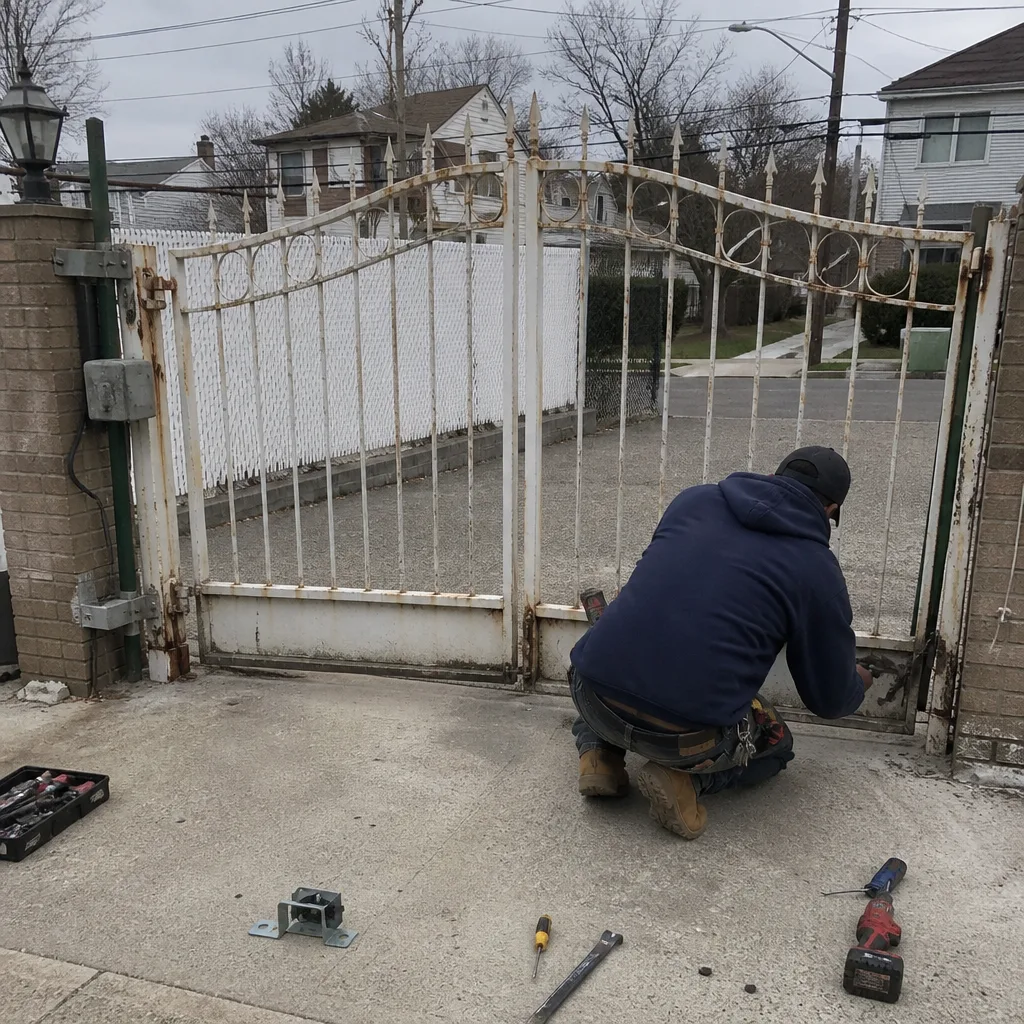 Before
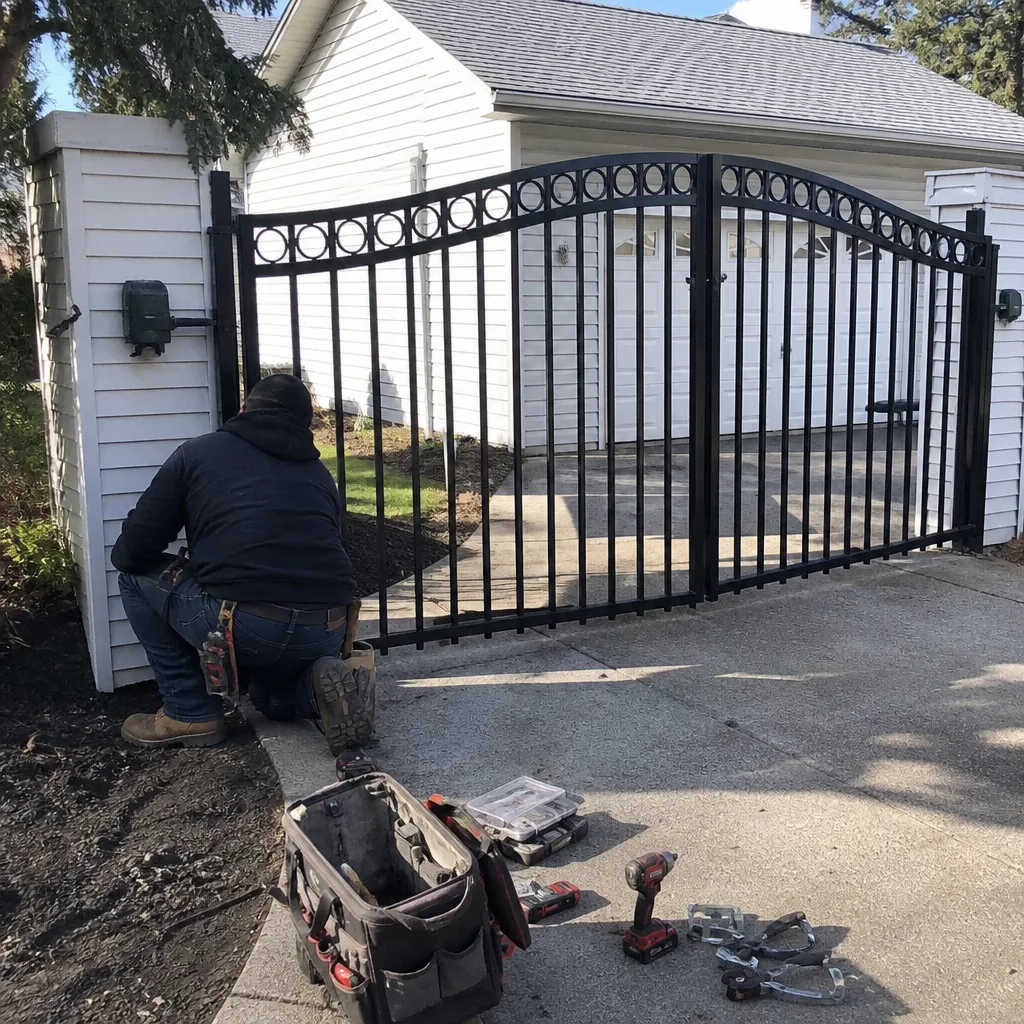 After
After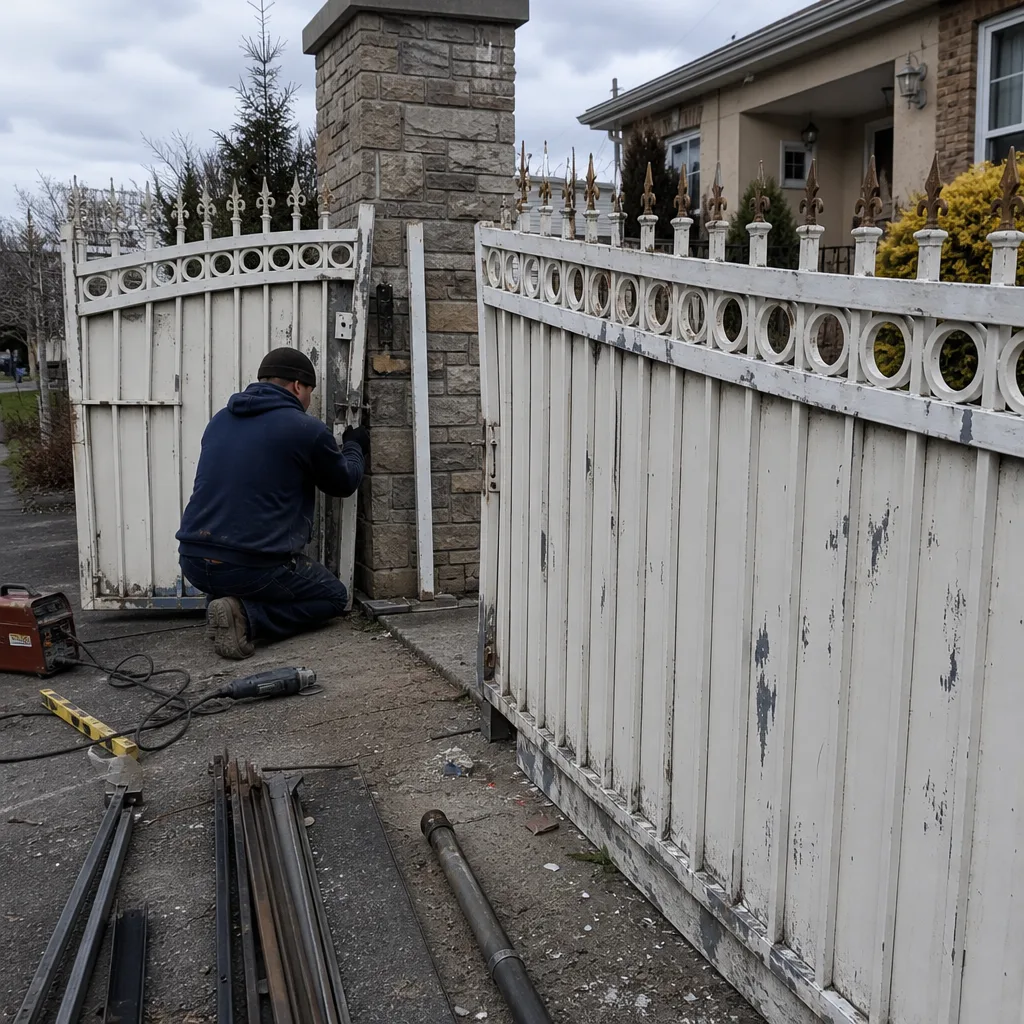 Before
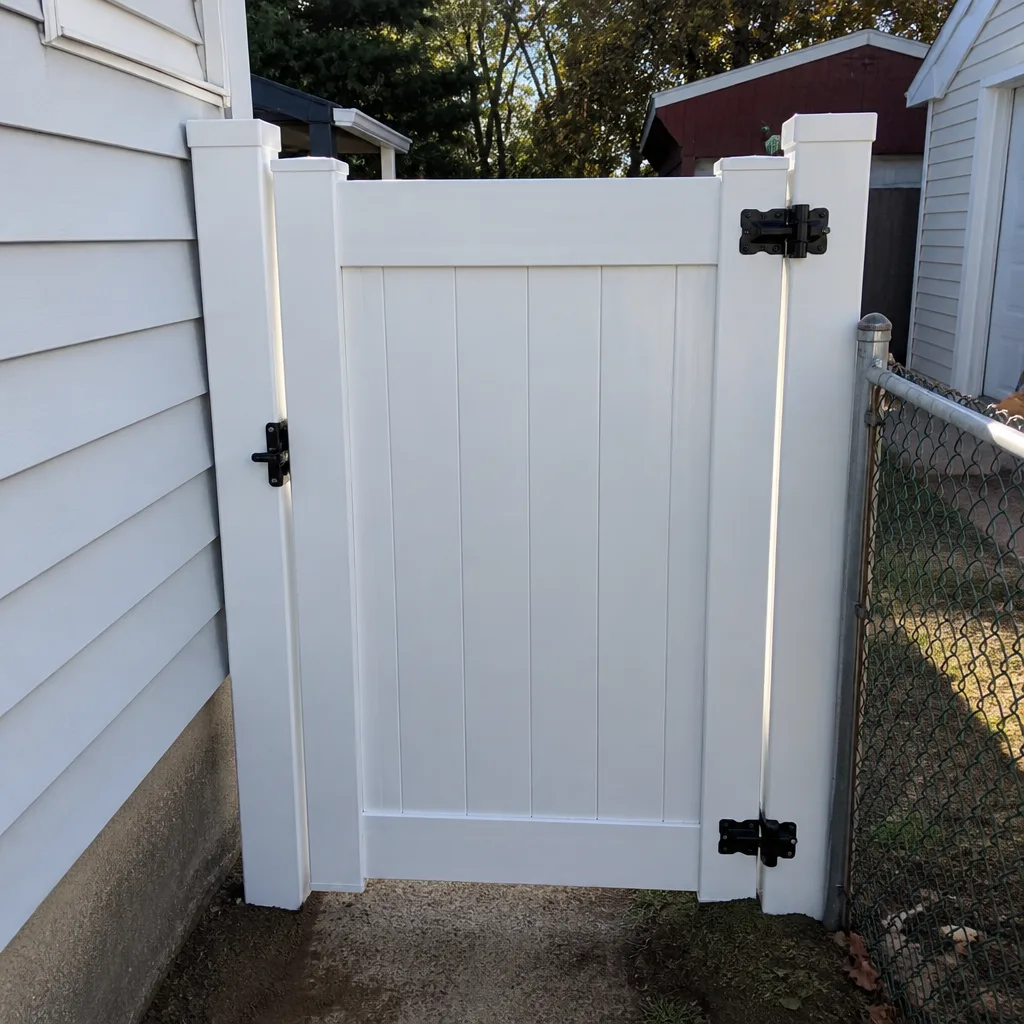 After
After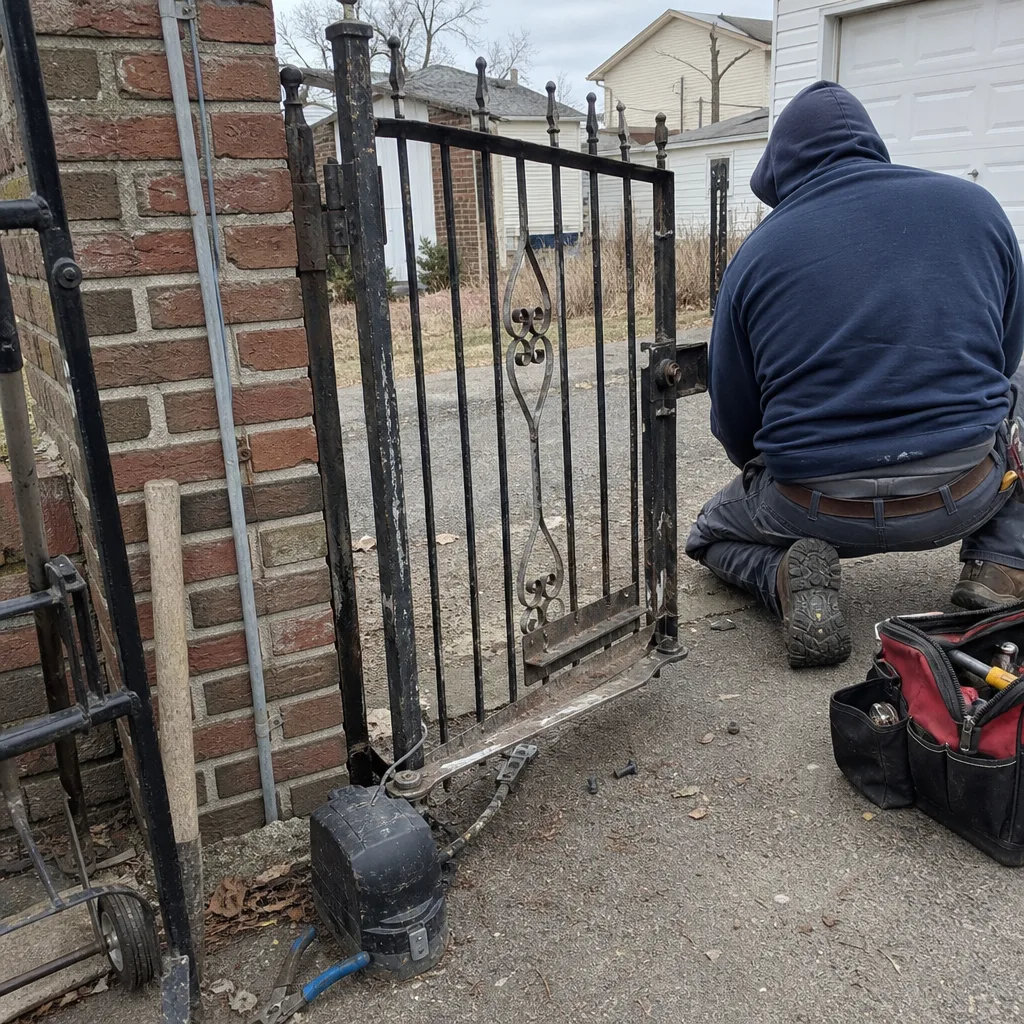 Before
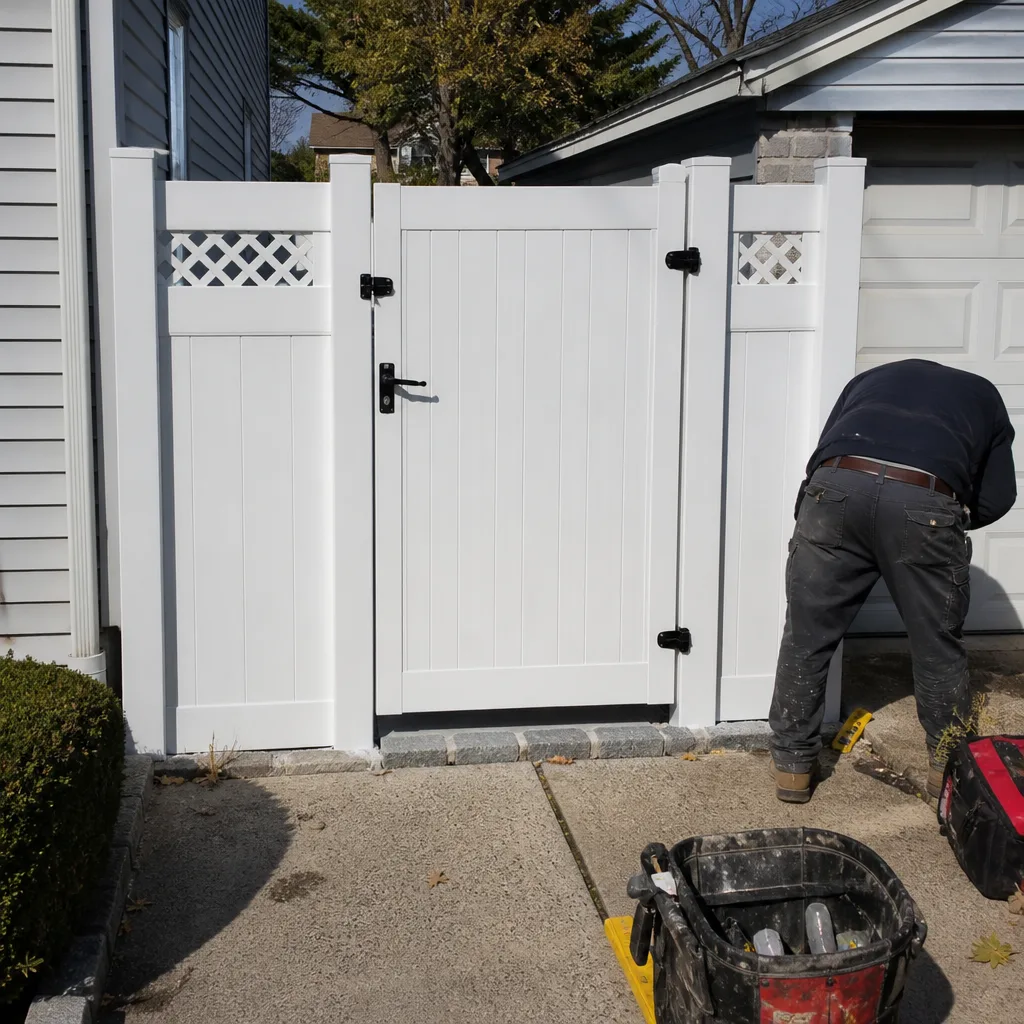 After
After